Proudly serving Phoenix, Glendale, Scottsdale, Tempe, Mesa, Chandler & surrounding areasCall or Text 24/7: 480-245-5233
Aerial drone view of the urban landscape, foothills, and residential sprawl in Phoenix, AZ.

24 Hour Towing and Emergency Roadside Assistance in Mesa, AZ

Phoenix Towing Co. provides 24 hour towing throughout Mesa, Arizona. Our core response services include emergency towing, roadside assistance, and flatbed towing. We also handle local towing and long distance towing for passenger vehicles and light trucks. Accident recovery, motorcycle towing, jump start service, and car lockout service round out our Mesa coverage.

Mesa drivers face summer asphalt temperatures of 160 to 170 degrees, heat that punishes batteries, tires, and cooling systems. Monsoon season, roughly June through September, can bring dust storms, near-zero visibility, and flash flooding near washes. Our trucks cover Mesa from Dobson Ranch and Downtown to Eastmark, Las Sendas, Red Mountain, and Superstition Springs. Dispatch runs around the clock because breakdowns on Loop 202, Loop 101, and US-60 do not wait for business hours.

Call with your location, vehicle type, and situation so dispatch can send the nearest available truck with the right towing or roadside equipment.

★ ★ ★ ★ ★4.9/5 Average Rating - 20+ Years of Experience - Mesa Towing Company Specialists - Residential & Commercial
Towing & Roadside Services

24 Hour Towing Services in Mesa, AZ

Coverage runs from Dobson Ranch, the Fiesta District, and Downtown Mesa to Las Sendas, Red Mountain, Eastmark, and Superstition Springs. Service also extends through the East Valley to Tempe, Gilbert, Queen Creek, Apache Junction, and Chandler, AZ .

24 Hour Towing

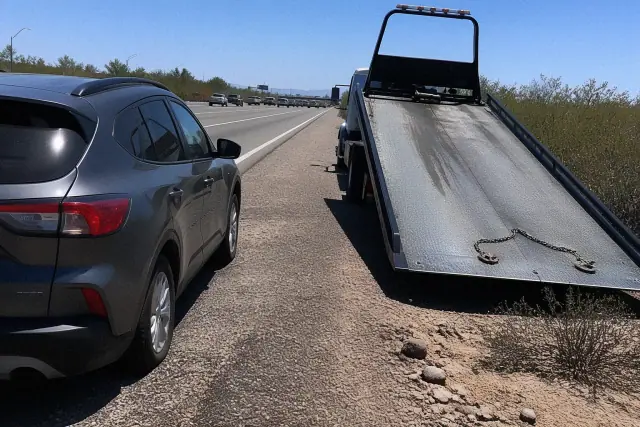
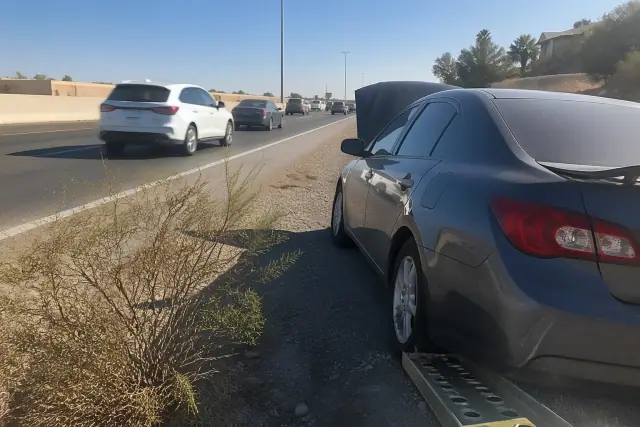
A tow truck with a tilted hydraulic bed loading a disabled vehicle on a gravel shoulder in Mesa, AZ.

Every towing and roadside service runs on a 24 hour schedule, including nights, weekends, and holidays. A call at 3 a.m. receives the same dispatch process as one during the afternoon, with safety risk used to prioritize the queue.

Explore Service

Emergency Towing

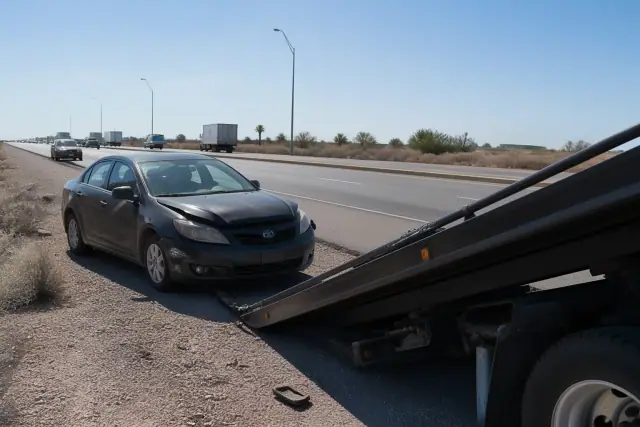
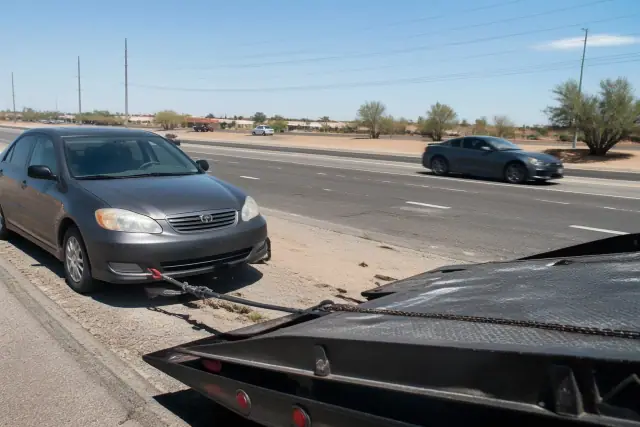
Disabled vehicle on a highway shoulder being loaded onto an emergency towing truck in Mesa, AZ.

Emergency towing is for a vehicle that will not start, will not stop safely, or should not be driven another mile. Dispatch prioritizes hazards such as a disabled car in a Country Club Drive traffic lane, and crews arrive with load-rated straps, wheel lifts, and safety chains.

Explore Service

Roadside Assistance

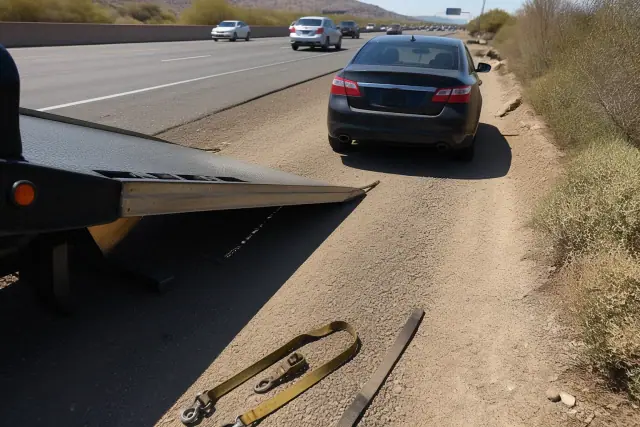
Disabled vehicle on a highway shoulder with a tow truck preparing for assistance in Mesa, AZ.

Roadside assistance covers flat tire changes, fuel delivery, water delivery during peak heat advisories, and basic mechanical troubleshooting. When a safe roadside fix is possible, the driver may be able to continue without paying for vehicle transport.

Explore Service

Flatbed Towing

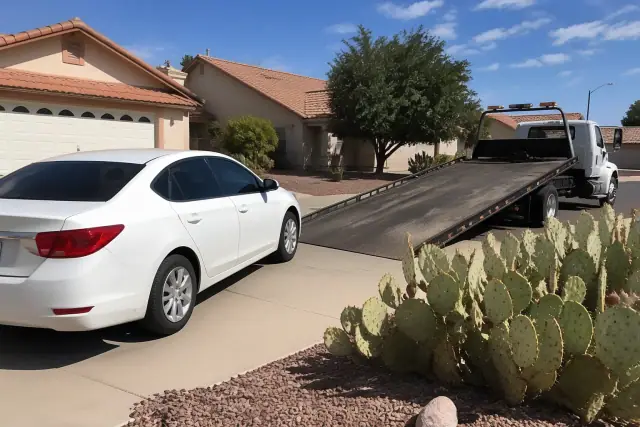
A vehicle on a concrete driveway in Mesa, AZ, being winched onto a flatbed tow truck near a house with cacti.

Flatbed towing keeps every wheel off the pavement and is the default for low-clearance vehicles, all-wheel-drive models, and vehicles with existing suspension or drivetrain damage. Hydraulic tilt beds and winch systems provide controlled loading for standard passenger vehicles and light trucks.

Local Towing

A disabled vehicle parked on the gravel shoulder of a highway in Mesa, AZ with desert scrub in the background.

Local towing covers North, South, East, and West Mesa within the company's standard service radius. Familiarity with roads from Main Street and Gilbert Road to Signal Butte Road helps dispatch match the closest available truck to the call.

Long Distance Towing

A tow truck with a lowered bed at a highway incident on a gravel shoulder in Mesa, AZ, with traffic in the background.

Long distance towing moves vehicles to Phoenix dealerships, specialty shops outside Maricopa County, and out-of-state destinations on flatbeds built for extended highway travel. Interstate trips operate under required USDOT registration, with routes planned around construction and closures on I-10 and US-60.

Accident Recovery

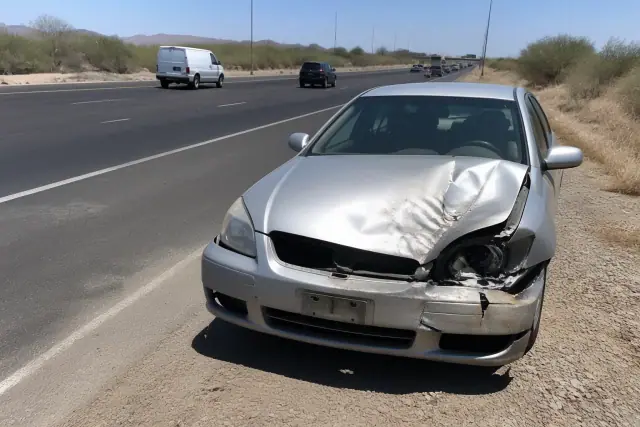
Disabled vehicle parked on the highway shoulder during an accident recovery in Mesa, AZ.

Accident recovery accounts for damaged vehicles, roadway debris, fluid leaks, and traffic control. Crews coordinate with the Mesa Police Department or Arizona Department of Public Safety when officers are on scene and photograph vehicle position and damage before moving it.

Motorcycle Towing

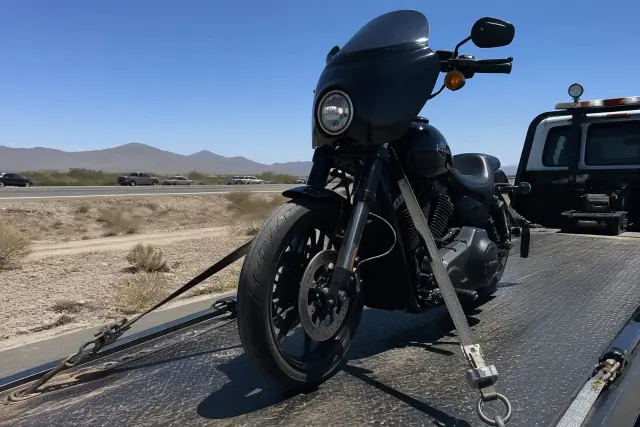
A motorcycle secured to a flatbed tow truck on a highway shoulder in Mesa, AZ, with desert scenery in the background.

Motorcycle towing uses wheel chocks and soft-tie systems that keep a bike upright without scratching paint, bending forks, or stressing the frame. Flatbed setups carry a disabled or damaged motorcycle from roads such as Power Road to the rider's home, shop, or dealership.

Jump Start Service

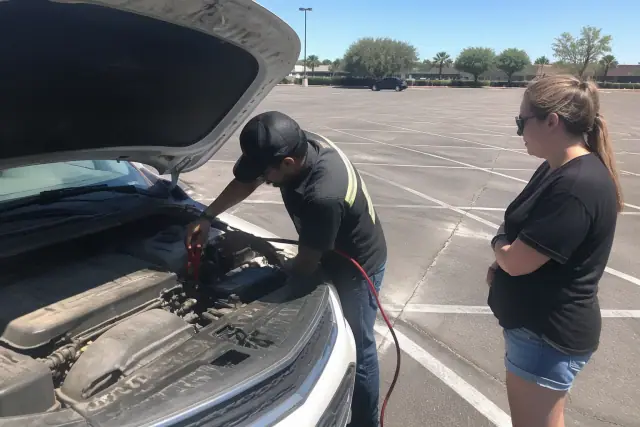
A technician using jumper cables on a vehicle battery in a parking lot in Mesa, AZ.

Stretches of 110-plus degree heat shorten battery life and make dead batteries a common Mesa roadside call. Commercial-grade jump packs and cable systems start most vehicles within minutes; if the battery will not hold a charge, the driver can discuss next steps or arrange a tow.

Car Lockout Service

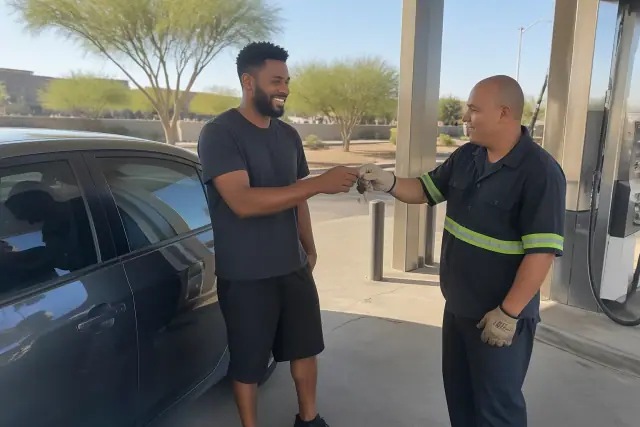
A technician returns car keys to a customer at a service station in Mesa, AZ after a vehicle lockout service.

Car lockout service addresses keys left inside and key fobs that stop communicating with the vehicle. Technicians use non-destructive entry tools intended to protect window seals, door panels, and lock mechanisms, with heat exposure treated seriously when a child or pet is inside.

Choosing Towing Equipment

Choose the Right Towing Option in Mesa

The right response depends on whether the vehicle can be made roadworthy, its ground clearance and drivetrain, its weight class, the kind of damage, the surrounding terrain, and the final destination. Sharing those details at dispatch helps the correct truck and equipment arrive the first time.

Roadside Help or Tow

A flat tire, empty fuel tank, dead battery, or simple lockout may be resolved at the roadside without transporting the vehicle. If the vehicle cannot start, stop, steer, or travel safely, towing is the safer choice.

Wheel-Lift Local Towing

A standard wheel-lift tow can fit routine local transport for many sedans when the vehicle's drivetrain, tire condition, and damage allow it. The driver checks those conditions before hookup instead of treating every vehicle the same.

Flatbed Vehicle Protection

Choose a flatbed for low ground clearance, all-wheel drive, suspension or drivetrain damage, or any situation where the wheels should stay off the road. A hydraulic tilt bed and winch allow controlled loading without dragging the vehicle.

Accident & Winch Recovery

Collision scenes and vehicles off a paved shoulder call for recovery equipment, not just routine transport. A proper winch line and anchor point help recover vehicles from loose sand or gravel, while accident crews also account for debris and leaking fluids.

Medium-Duty Towing Capacity

Larger pickups, work trucks, cargo vans, and trailers may need higher-capacity winches, reinforced tie-downs, and medium-duty equipment. Crews evaluate gross vehicle weight, axle configuration, tire condition, and cargo load before hookup.

Long-Distance Flatbed Transport

Use long distance towing when the destination is a Phoenix dealership, an out-of-county specialty shop, or an out-of-state location. Extended highway trips are planned for distance, vehicle class, road conditions, and known route closures.

Mesa Roadside Risks

Common Roadside Problems in Mesa

As Arizona's third-most populous city and the most populous city in the East Valley, Mesa has more than 504,000 residents spread across a large road network. Breakdowns appear on busy freeways, neighborhood streets, job sites, and desert-edge shoulders, where heat, monsoon weather, heavy traffic, and loose surfaces each call for a different safe response.

Request Roadside Help

Heat-Drained Batteries

Prolonged desert heat accelerates battery degradation, so a vehicle may fail to start after sitting in a Mesa parking lot. A jump start can restore power quickly, but a battery that will not hold a charge may need a tow to the driver's preferred shop.

Flat Tires & Blowouts

Underinflated tires expand on hot pavement and can fail on Mesa surface streets or freeway shoulders. Roadside assistance can change a usable spare in a safe location; damaged wheels, multiple flat tires, or an unsafe shoulder may require towing.

Overheating & Cooling Problems

Extreme summer temperatures push vehicle cooling systems harder and can leave a car unsafe to drive. Roadside assessment helps determine whether basic troubleshooting is appropriate or whether the vehicle should be transported instead.

Vehicle Lockouts

Keys left in the ignition and failed electronic fobs can strand a driver outside the vehicle. Non-destructive entry tools are used to avoid harming seals, panels, and lock mechanisms, while a child or pet inside makes heat exposure the immediate concern.

Collisions & Disabled Vehicles

A collision or mechanical failure on Main Street, the Red Mountain Freeway, or another active route can expose the vehicle and driver to following traffic. Recovery crews choose a safe hookup method while accounting for damage, debris, fluid leaks, and on-scene traffic control.

Sand, Gravel & Wash Recoveries

Vehicles that leave an unpaved shoulder near Red Mountain or Eastmark can settle into loose sand or gravel. Monsoon runoff can also affect low-lying washes near the Salt River, so recovery may require a winch line, a stable anchor point, and a careful scene assessment.

Why Choose Us

Why Choose Phoenix Towing Co. in Mesa?

A dependable towing response combines local truck positioning, clear communication, and equipment matched to the vehicle. Phoenix Towing Co. uses those details to provide realistic arrival information, explain the expected cost when conditions allow, and avoid delays caused by sending the wrong truck.

Mesa-Wide Truck Positioning

Trucks are positioned throughout the service area rather than dispatched from one lot. That model supports calls across Mesa's broad footprint, from Dobson Ranch to Eastmark, while reducing unnecessary drive time.

Clear Arrival & Cost Estimates

Dispatch provides a realistic arrival estimate and calls back when traffic or distance changes it. Pricing is explained as a base hookup fee plus mileage, with the expected cost confirmed before transport whenever the situation allows.

Right Equipment the First Time

Dispatchers ask about the vehicle, damage, drivetrain, weight, and location before assigning a truck. Those questions help determine whether the job needs a wheel lift, flatbed, higher-capacity winch, or specialized motorcycle securement.

Simple Dispatch Process

Our Mesa Towing & Roadside Process

Each call moves from dispatch details to equipment selection, scene assessment, cost confirmation, and secure transport. The process is designed to give the driver useful information before hookup and adapt when traffic or scene conditions change.

01.

Share Your Location & Situation

Tell dispatch where the vehicle is, what type of vehicle you have, and whether it is disabled, damaged, locked, or off the roadway. Mention any immediate traffic, heat, child, pet, debris, or fluid-leak concern.

02.

Assign the Nearest Available Truck

The dispatcher checks truck position and equipment, then assigns the nearest available unit suited to the job. Safety risk affects priority, especially when a vehicle is exposed in an active travel lane.

03.

Receive an Arrival Estimate

You receive a realistic arrival estimate based on truck location, traffic, and distance. Dispatch calls back if road conditions or travel time materially change that estimate.

04.

Assess the Vehicle & Scene

On arrival, the driver inspects the vehicle, surrounding surface, tire condition, damage, and safety risks. Collision recovery can also include photographs of vehicle position and damage before anything is moved.

05.

Confirm the Method & Cost

The driver explains whether the job calls for roadside help, a wheel lift, flatbed transport, or winch recovery. The base hookup and per-mile pricing are reviewed before towing whenever conditions make that possible.

06.

Secure & Transport the Vehicle

The vehicle is loaded with straps, safety chains, wheel chocks, or soft ties suited to its type and condition, then transported to the selected destination. When towing is covered by insurance or a roadside assistance membership, Phoenix Towing Co. can work with that coverage directly in many cases.

Common Towing Scenarios

Towing Options for Mesa Drivers & Businesses

Case Study 1: Roadside resolution: A dead battery, usable spare tire, empty fuel tank, or lockout can often be handled where the vehicle stopped, avoiding transport when a safe fix is available.

Case Study 2: Protected vehicle transport: A low-clearance car, all-wheel-drive SUV, motorcycle, or damaged vehicle can be loaded with the flatbed and securement method suited to its condition.

Case Study 3: Commercial & recovery support: Larger pickups, work trucks, cargo vans, trailers, and collision-damaged vehicles receive weight, axle, cargo, debris, and hookup checks before recovery or transport.

Get Towing Help

Get Mesa
Towing Help
Now

Tell Phoenix Towing Co. where the vehicle is, what happened, and where it needs to go. Dispatch will match the call to an available truck and explain the expected arrival and towing method.

Mesa Towing Help

FAQs About 24 Hour Towing in Mesa, AZ

These answers cover scheduling, pricing, service areas, vehicle types, roadside help, recovery, and dispatch. Call with the vehicle's location and condition when you need help choosing the right service.

Call Phoenix Towing Co.

Yes. Phoenix Towing Co. accepts scheduled tows for dealership appointments, repair-shop intake windows, and other non-emergency moves. Dispatch confirms availability for the preferred window and calls before the truck heads out, although an emergency call may take priority.

Towing usually includes a base hookup fee plus mileage after the vehicle is loaded. National averages cited for a routine tow are roughly 109 dollars, with typical mileage rates between 2.50 and 4.75 dollars per mile depending on distance and vehicle class. Local wheel-lift towing generally costs less than long-distance, flatbed, or medium-duty work, and Phoenix Towing Co. provides an estimate before towing whenever conditions allow.

Coverage includes Downtown Mesa, Dobson Ranch, the Fiesta District, Las Sendas, Red Mountain, Eastmark, Superstition Springs, and North, South, East, and West Mesa. Service also extends through Maricopa County to Tempe, Chandler, Gilbert, Queen Creek, and Apache Junction.

Yes. Towing and roadside services operate on a 24 hour schedule, so late-night, early-morning, weekend, and holiday calls use the same dispatch process. Safety risk and truck availability determine priority.

A flatbed is the preferred option for low-clearance vehicles, all-wheel-drive models, and vehicles with suspension, drivetrain, or collision damage. Keeping every wheel off the pavement reduces contact during loading and transport.

Motorcycle towing uses a flatbed, wheel chocks, and soft ties designed to keep the bike upright and stable. That setup avoids relying on a standard wheel lift and protects the paint, forks, and frame during transport.

Roadside assistance includes flat tire changes, fuel delivery, water delivery during peak heat advisories, jump starts, car lockout help, and basic mechanical troubleshooting. When the problem can be resolved safely at the roadside, a full tow may not be needed.

The driver can advise on the next step after attempting the jump. If the vehicle still will not run reliably, Phoenix Towing Co. can arrange transport to the repair shop you choose.

Accident recovery may involve vehicle damage, debris, leaking fluids, traffic control, and coordination with officers on scene. Crews assess and photograph the vehicle before moving it, then choose a hookup that fits its condition.

Yes, when the vehicle fits the company's medium-duty towing and recovery equipment. Crews evaluate gross vehicle weight, axle configuration, tire condition, and cargo load before selecting higher-capacity winches and reinforced securement.

Yes. Long distance flatbed towing can move a vehicle to a Phoenix dealership, an out-of-county specialty shop, or an out-of-state destination. Interstate trips operate under required USDOT registration and are planned around distance, vehicle class, construction, and closures.

Dispatch gathers the location, vehicle type, condition, and safety situation, then assigns the nearest available truck with suitable equipment. Those details help determine whether the call needs roadside tools, a wheel lift, a flatbed, a winch, or motorcycle securement.

In many cases, Phoenix Towing Co. can work directly with insurance or a roadside assistance membership when the plan covers towing. Coverage varies, so have the policy or membership details available when you call.

Provide your exact location, vehicle type, what happened, and the intended destination. Also mention drivetrain, low clearance, collision damage, cargo, a child or pet inside, traffic exposure, loose terrain, or leaking fluid so dispatch can send suitable equipment.

Yes, when the scene can be approached and recovered safely. Loose sand or gravel may require a proper winch line and stable anchor point, while monsoon runoff near a wash calls for an additional safety assessment before recovery begins.