Proudly serving Phoenix, Glendale, Scottsdale, Tempe, Mesa, Chandler & surrounding areasCall or Text 24/7: 480-245-5233
Aerial drone view of the urban landscape, foothills, and residential sprawl in Phoenix, AZ.

Accident Recovery and Collision Scene Wrecker Service in Phoenix, AZ

Phoenix Towing Co. provides accident recovery throughout Phoenix and the greater metro area. Our services include 24-hour emergency towing, flatbed towing, roadside assistance, local towing, and long-distance transport. We also recover motorcycles, passenger vehicles, light fleet vehicles, and work trucks. Dispatch matches wheel-lift extraction, hydraulic winching, or flatbed loading to the vehicle's condition.

Arizona recorded more than 127,000 crashes in a recent reporting year, and a disabled vehicle on I-10, I-17, Loop 101, or Loop 202 can quickly expose drivers to a secondary collision. Our operators assess frame, wheel, drivetrain, and fluid-leak concerns before moving the vehicle. GPS-tracked routing uses live traffic data to guide the nearest suitable truck around current backups. On active highway scenes, dispatchers coordinate with Phoenix Police and Arizona Department of Public Safety troopers before recovery begins.

WreckMaster-trained recovery protocols, commercial auto liability coverage, and licensing through the Arizona Department of Public Safety under A.R.S. Title 28 support a documented, traceable dispatch from the initial call through transport.

Phoenix Towing Co. provides accident recovery in Phoenix, Scottsdale, Tempe, Mesa, Glendale, Chandler, Peoria, and across the greater Phoenix metro area.

★ ★ ★ ★ ★4.9/5 Average Rating · 20+ Years of Experience · Thousands of Customers Helped · Licensed & Insured · Residential & Commercial

Phoenix Accident Recovery Options & Benefits

What Is Accident Recovery?

Accident recovery is the controlled removal of a collision-damaged vehicle from a roadway, shoulder, barrier, wash, or other difficult position. Unlike routine towing, the work may require stabilization, winching, containment, and coordination with responding officers.

Operators evaluate frame damage, wheel alignment, drivetrain condition, loose parts, broken glass, and fluid leaks before selecting equipment. That assessment helps avoid turning collision damage into additional tire, bearing, transmission, rim, or body damage during loading.

After securing the vehicle, the operator confirms whether it should go to a body shop, the owner's home, or an insurance-approved facility. The crew also addresses immediate debris and spill hazards tied to the recovered vehicle before leaving the scene.

Benefits of Professional Accident Recovery

A damage-aware recovery plan protects the vehicle, people at the scene, and the roadway around it. Phoenix Towing Co. combines scene assessment, suitable equipment, secure transport, and useful documentation in one coordinated response.

  • Reduces active-lane exposure and secondary collision risk
  • Matches flatbed, wheel-lift, or winching equipment to the damage
  • Keeps damaged steering, suspension, and drivetrains off the road
  • Documents vehicle position and condition before movement when possible
  • Provides time, location, and condition notes on the tow receipt
  • Contains oil, coolant, and fuel leaks at the scene
  • Clears broken glass, trim, and collision debris from the roadway
  • Transports the vehicle to the destination selected by the owner
Accident Recovery Services

Phoenix Accident Recovery Services

Collision scenes range from a drivable fender bender on Camelback Road to a rollover near a desert shoulder or a multi-vehicle crash on the I-10 Broadway Curve. The service and equipment are selected around the actual position, size, and condition of each vehicle.

24-Hour Emergency Towing

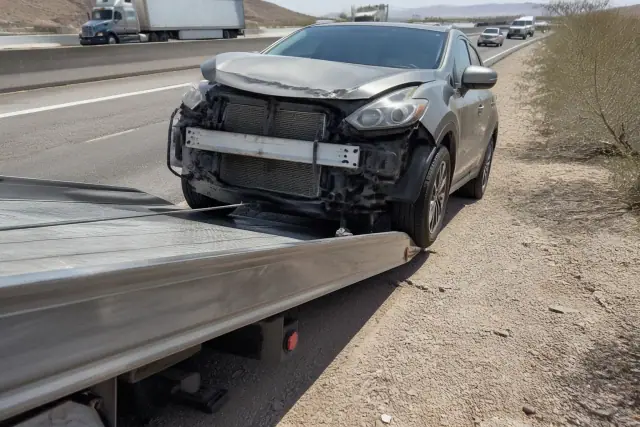
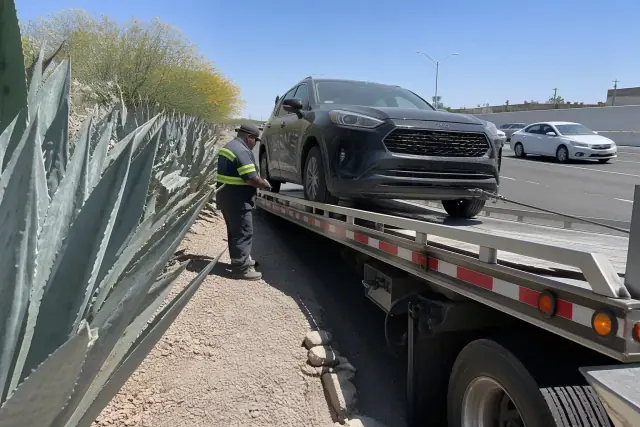
A disabled vehicle being winched onto a flatbed tow truck on a desert roadside in Phoenix, AZ.

The dispatch line operates 24/7/365 for collisions and disabled vehicles across the Valley. Call details include the location, vehicle condition, and whether anyone is injured so the nearest suitable truck can be routed with a realistic arrival window.

Request Estimate

Vehicle Extraction and Winching

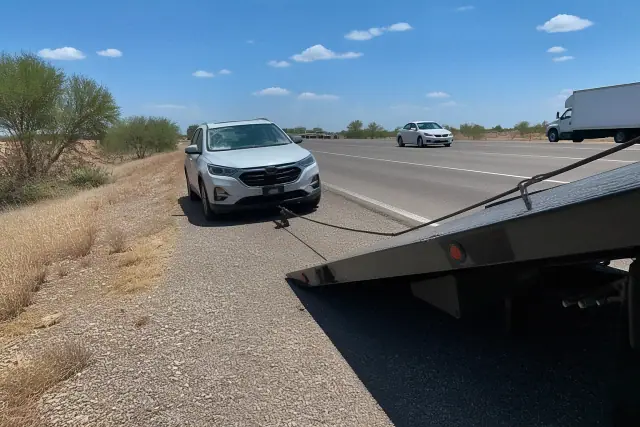
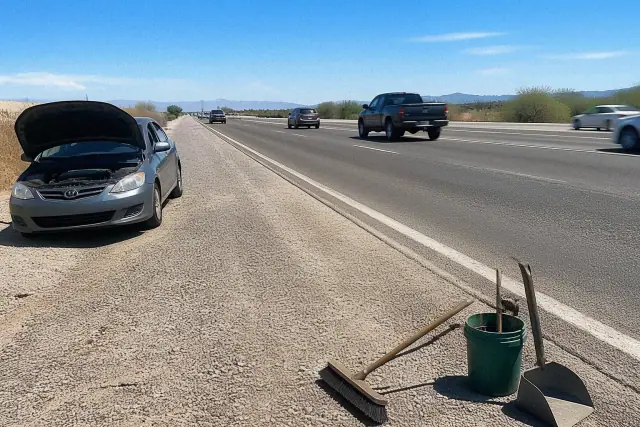
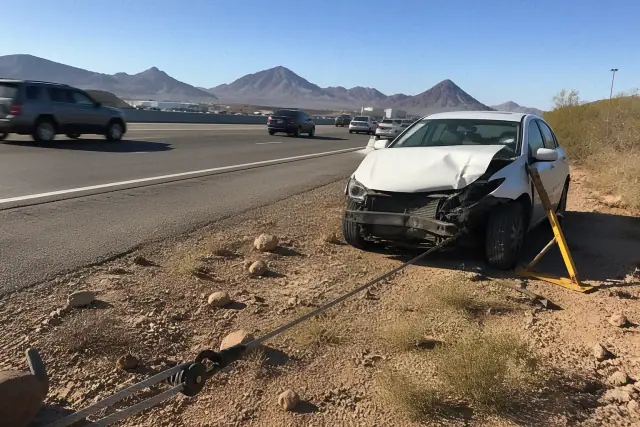
Winch cable attached to a disabled vehicle on a gravel shoulder during an accident recovery in Phoenix, AZ.

Vehicles resting against barriers or off the roadway near washes and desert shoulders may need hydraulic winching and stabilization rigging. The operator plans the pull to limit movement across uneven ground and avoid adding damage to an already compromised vehicle.

Request Estimate

Flatbed Accident Transport

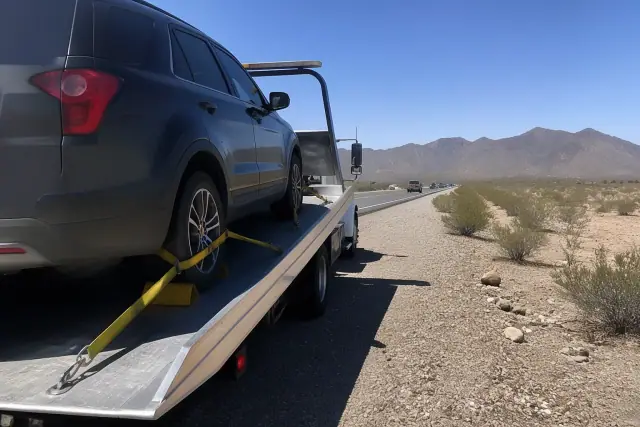
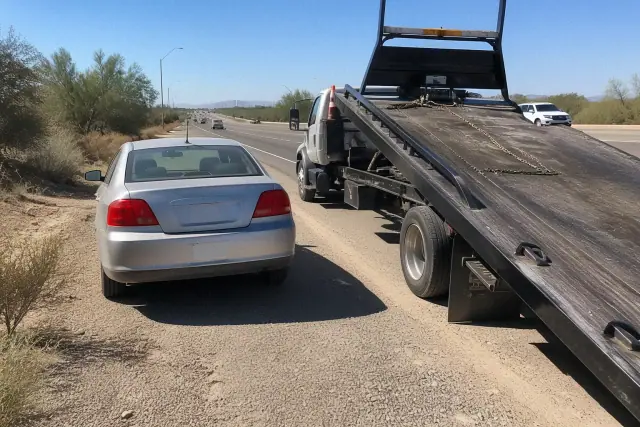
Flatbed truck with a secured vehicle on a highway shoulder in Phoenix, AZ.

Flatbed towing carries the entire vehicle off the road when steering, suspension, alignment, or drivetrain damage makes wheel contact unsafe. It is also the preferred approach described in the draft for lowered vehicles, all-wheel-drive systems, and motorcycles involved in a collision.

Request Estimate

Damage Assessment and Documentation

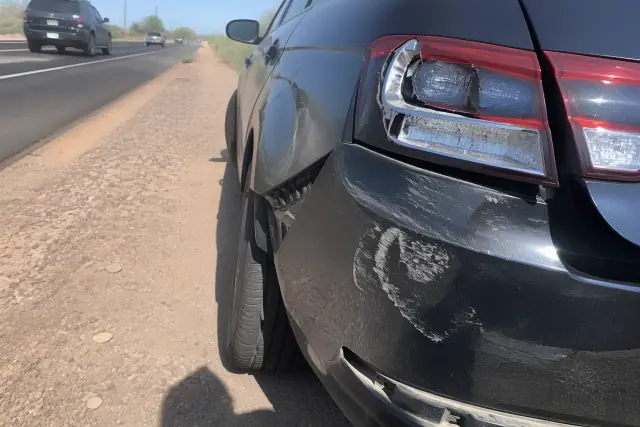
Worker documenting vehicle damage on a gravel shoulder in Phoenix, AZ.

Operators inspect frame alignment, tires, wheels, fluids, and the undercarriage before loading. When possible, they photograph the vehicle's position and damage, then issue a tow receipt with time, location, and condition notes that can support later insurance or attorney requests.

Request Estimate

Accident Scene Cleanup

A disabled vehicle being cleared by a cleanup crew on a roadside in Phoenix, AZ.

Standard accident recovery includes clearing broken glass, plastic trim, and scattered vehicle debris from the immediate roadway. Trucks carry absorbent spill materials for oil, coolant, and fuel so vehicle-related hazards can be contained before the scene reopens to traffic.

Request Estimate

Roadside and Specialty Towing

A disabled vehicle being winched onto a flatbed truck on a highway shoulder in Phoenix, AZ.

Additional service includes battery jump starts, non-destructive car lockout help, motorcycle towing, commercial towing for light fleets and work trucks, and long-distance transport to Flagstaff, Tucson, or across the state line. Commercial-grade jump packs support standard and hybrid vehicle electrical systems.

Request Estimate
Recovery Equipment Options

Accident Vehicle Recovery Methods

The safest transport method depends on whether the vehicle can roll, steer, and support its own weight. Phoenix Towing Co. selects from light-, medium-, and heavy-duty capacity along with flatbeds, wheel lifts, winches, stabilization rigging, and specialty securement.

A flatbed tow truck recovering a disabled vehicle on the gravel shoulder of a roadway in Phoenix, AZ.

Flatbed Transport

A flatbed lifts the full vehicle off the pavement, eliminating road stress on damaged components. Wheel straps and soft-tie anchor points rated for highway transport secure the load without using chains against rims or bodywork.

  • Steering or suspension damage
  • A wheel that will not turn freely
  • All-wheel-drive vehicles
  • Lowered vehicles
  • Collision-damaged motorcycles
Request Estimate
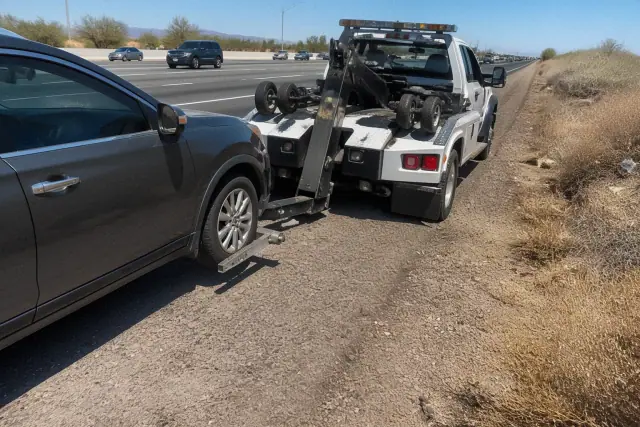
A wheel-lift tow truck recovering a disabled vehicle on a highway shoulder in Phoenix, AZ.

Wheel-Lift Extraction

Wheel-lift equipment can move a vehicle when the operator confirms that the remaining wheels and drivetrain can travel safely. This method is selected from the damage assessment instead of being forced onto every recovery.

  • Condition checked before hookup
  • Wheel alignment considered
  • Drivetrain condition evaluated
  • Secure lift points selected
  • Destination confirmed before transport
Request Estimate
Hydraulic winch line tensioned on a disabled vehicle parked on a highway shoulder in Phoenix, AZ.

Hydraulic Winching and Stabilization

Hydraulic winching and stabilization rigging help recover vehicles that rolled, left the roadway, or came to rest near a barrier. Controlled rigging limits uncontrolled movement while the vehicle is brought to a position where it can be loaded safely.

  • Rollover recovery
  • Desert shoulder extraction
  • Wash and uneven-ground recovery
  • Barrier-side stabilization
  • Controlled positioning for loading
Request Estimate
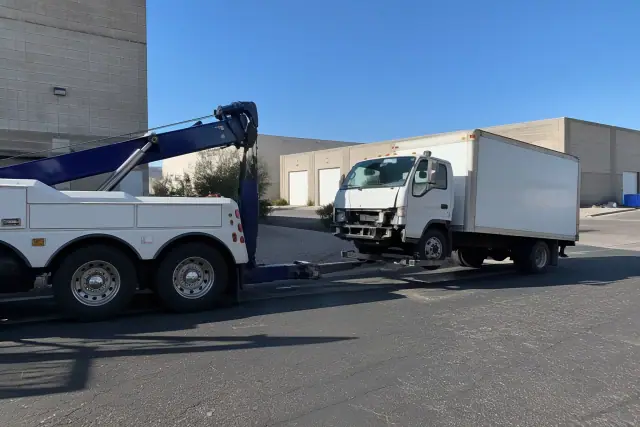
Heavy-duty wrecker towing a damaged box truck at an industrial warehouse in Phoenix, AZ.

Heavy- and Medium-Duty Recovery

Larger accident vehicles require medium- or heavy-duty towing capacity, while standard passenger cars use light-duty equipment. Multi-vehicle accident calls may require more than one truck at the same time, and dispatch accounts for that need at the outset.

  • Medium-duty vehicle capacity
  • Heavy-duty vehicle capacity
  • Light-duty passenger vehicles
  • Light fleet and work trucks
  • Multiple trucks for complex scenes
Request Estimate
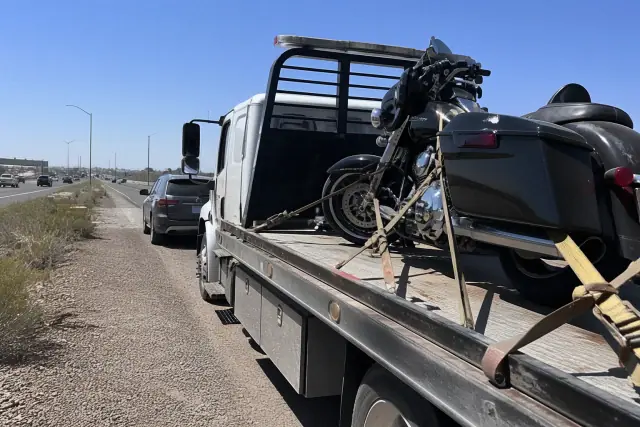
Motorcycle secured on a flatbed tow truck on a highway shoulder in Phoenix, AZ.

Motorcycle and Specialty Transport

Motorcycles need different loading angles and tie-down points than passenger vehicles. Dedicated wheel chocks and two-wheel tie-down systems keep a collision-damaged motorcycle supported during loading and highway transport.

  • Dedicated motorcycle wheel chocks
  • Two-wheeled recovery tie-downs
  • Vehicle-specific loading angles
  • Soft-tie anchor points
  • Secure highway transport
Request Estimate
Finding the Right Fit

Choosing the Right Recovery Approach

The decision starts with the vehicle's position and whether its frame, steering, wheels, suspension, and drivetrain can tolerate movement. Operators then account for vehicle size, loose components, leaking fluids, surrounding traffic, and the final destination before choosing a wheel lift, flatbed, winch, stabilization rigging, or a combination of methods.

Damage-Aware Vehicle Assessment

The operator checks for frame misalignment, fluid leaks, tire and wheel damage, undercarriage impact, and drivetrain concerns before equipment touches the vehicle. This evaluation determines whether the vehicle can roll or needs full off-ground transport.

Recovery-Trained Operators

WreckMaster-trained protocols guide wheel-lift extraction, hydraulic winching, stabilization, and flatbed loading. The goal is a controlled recovery method suited to the damage, not a one-rig-fits-all hookup.

Documented, GPS-Tracked Dispatch

Live traffic data supports GPS-tracked routing around I-10 backups and Loop 202 construction zones. Photos when possible, condition notes, and a time-and-location tow receipt create a traceable record from the scene through delivery.

What Sets Us Apart

Why Choose Phoenix Towing Co. for Accident Recovery?

Phoenix Towing Co. combines Arizona Department of Public Safety licensing under A.R.S. Title 28, commercial auto liability coverage, trained recovery protocols, and condition-based equipment selection. Dispatch documentation and direct coordination with responding Phoenix Police or DPS personnel help keep active scenes orderly while the vehicle is secured and moved.

Request Accident Recovery

Active-Lane Collision Risk

A disabled vehicle blocking I-17, Loop 101, or another Phoenix travel lane can create a secondary collision risk within minutes. Hazard lights, a clear 911 report, and prompt professional recovery reduce the time people and vehicles remain exposed to traffic.

Vehicle Fluid Leaks

Oil, coolant, or fuel leaking after a crash creates both a vehicle concern and a roadway hazard. Recovery trucks carry absorbent containment materials so fluid tied to the damaged vehicle can be controlled before transport.

Steering and Wheel Damage

A vehicle that will not steer straight, has a wheel that cannot turn freely, or shows suspension or alignment damage should not be dragged on the roadway. Flatbed transport keeps damaged tires, bearings, transmission components, and wheels from carrying the load.

Off-Road or Barrier Recovery

Vehicles that roll, leave the pavement, or stop against a barrier need controlled positioning before loading. Winching and stabilization rigging are used around washes and uneven desert shoulders, including conditions found near the outer Loop 303 corridor.

Broken Glass and Road Debris

Broken glass, plastic trim, and loose vehicle parts can puncture tires or contribute to another incident after the tow truck leaves. Clearing immediate collision debris is part of the accident recovery work described for roadways, parking lots, residential streets, and highway shoulders.

Complex Multi-Vehicle Scenes

A multi-vehicle collision may involve different damage patterns, vehicle sizes, and destinations. Dispatch can send more than one truck simultaneously so the scene is not delayed while waiting for a second unit after the first vehicle is secured.

How it works

Our Accident Recovery Process

From the first call through scene clearance, each step is built around safe access, the vehicle's actual condition, and a clear transport destination. Accurate dispatch details help the correct truck and recovery equipment arrive without unnecessary delay.

01.

Share the Scene Details

Tell dispatch your location, vehicle type and condition, whether it is blocking traffic, and whether anyone is injured. These details help determine the urgency, equipment, and officer coordination needed.

02.

Dispatch the Suitable Truck

GPS-tracked towing software and live traffic data route the nearest available truck suited to the vehicle and scene. Dispatch provides an arrival window and updates it if traffic or conditions change.

03.

Assess and Secure the Scene

On arrival, the operator checks traffic exposure, vehicle stability, leaks, loose parts, and visible damage. When officers are present, the operator coordinates with them before recovery equipment touches the vehicle.

04.

Select the Recovery Method

Frame, wheel, suspension, steering, and drivetrain condition determine whether the vehicle needs a wheel lift, flatbed, hydraulic winch, stabilization rigging, or multiple trucks. The selected method is intended to avoid adding transport damage.

05.

Document and Load the Vehicle

The operator photographs the position and damage before movement when possible, records condition notes, and secures the vehicle with appropriate straps and anchor points. Loose parts and leaking fluids are contained before departure.

06.

Transport and Clear Hazards

The vehicle is delivered to the owner's selected body shop, home, or insurance-approved facility. Before leaving, the crew clears broken glass, trim, debris, and immediate spill hazards tied to the recovered vehicle.

Get Accident Recovery Help

Request Accident Recovery in Phoenix

If your vehicle will not start, steer straight, roll freely, or safely leave traffic after a collision, contact Phoenix Towing Co. Share the exact scene and vehicle details so dispatch can send the appropriate towing and recovery equipment.

Accident Recovery Help

Phoenix Accident Recovery FAQs

These answers cover immediate safety, Arizona accident requirements, towing methods, documentation, transport, cleanup, service coverage, and related roadside help described in the source material.

Call About Accident Recovery

Vehicle-side recovery can be completed once the scene is released and the vehicle is safely moved, with repair estimates often beginning within a day or two depending on shop availability. For people, the source notes that minor soreness may fade in a day or two, while more serious injuries such as whiplash, sprains, concussions, or spinal trauma commonly take around six weeks and sometimes longer. Seek medical care for injury questions because recovery varies with severity and treatment.

Check yourself and your passengers for injuries, call 911 when anyone is hurt or the damage is significant, and turn on your hazard lights. Exchange information and photograph vehicle positions, damage, plates, road markings, and nearby signs before anything is moved when it is safe to do so. Notify your insurer promptly and seek medical attention if needed.

The source material gives a broad common range of around $15,000 to $250,000 or more, with severe injury cases at the higher end, but every claim depends on its specific facts. Attorney fees, medical liens, and case costs may be deducted from a settlement. Tow records, scene photos, and medical paperwork can help preserve a complete record, but Phoenix Towing Co. does not handle claims or determine settlement value.

The source identifies A.R.S. 28-667 as Arizona's fender bender law and says drivers should move a drivable vehicle out of traffic when no one is injured. If the vehicle cannot be moved safely or someone is injured, stay put, activate the hazards, and call for help. Drivers must also exchange information and report collisions involving injury, death, or significant property damage to law enforcement.

Cost depends on the transport distance, vehicle size, and whether the recovery needs a flatbed, wheel lift, heavy-duty equipment, or specialty rigging. Local towing generally costs less than long-distance transport, and insurance may cover some or all accident-related towing depending on the policy. Phoenix Towing Co. provides pricing information before dispatch and does not add hidden charges after the truck arrives.

Use a flatbed when steering, suspension, alignment, wheel, or drivetrain damage makes it unsafe for the vehicle to ride on its wheels. Flatbed transport is also the safer choice described for lowered vehicles, all-wheel-drive systems, and collision-damaged motorcycles. It carries the entire vehicle off the ground to avoid additional road stress.

When possible, the operator photographs the vehicle's position and visible damage before it is moved. The assessment notes whether it is drivable along with frame, tire, wheel, undercarriage, and fluid-leak concerns. The tow receipt includes the time, location, and condition notes for a traceable record.

After the vehicle is secured, the operator confirms the owner's preferred destination. The source lists a body shop, the owner's home, or an insurance-approved facility as common choices. Long-distance towing is also available for transport from Phoenix to Flagstaff, Tucson, or across the state line.

Phoenix Towing Co. serves Phoenix, Scottsdale, Tempe, Mesa, Glendale, Chandler, and Peoria, along with the greater Phoenix metro area. The draft describes crews staged across the Valley to cover west-side and East Valley accident scenes.

Yes. For vehicles that rolled, left the roadway, or stopped near a wash, desert shoulder, or barrier, operators can use hydraulic winching and stabilization rigging. The vehicle is controlled and repositioned for safe loading instead of being dragged across uneven ground.

Standard accident recovery includes clearing broken glass, plastic trim, and scattered debris tied to the vehicle from the immediate roadway. Trucks also carry absorbent containment materials for oil, coolant, and fuel leaks. The crew addresses those immediate vehicle-related hazards before leaving the scene.

Motorcycle towing uses loading angles and securement points designed for two-wheeled vehicles. Dedicated motorcycle wheel chocks, tie-down systems, and soft-tie anchor points support the bike without relying on improvised passenger-vehicle straps.

Phoenix Towing Co. provides battery jump starts, car lockout service, local towing, long-distance towing, motorcycle towing, and commercial towing for light fleet vehicles and work trucks. Jump-start trucks carry commercial-grade packs for standard and hybrid electrical systems, while lockout calls use non-destructive entry tools intended to protect weatherstripping, window tint, and lock cylinders. Battery-call volume rises in June and July during Phoenix's triple-digit summer heat.