Proudly serving Phoenix, Glendale, Scottsdale, Tempe, Mesa, Chandler & surrounding areasCall or Text 24/7: 480-245-5233
Aerial drone view of the urban landscape, foothills, and residential sprawl in Phoenix, AZ.

24 Hour Towing and Emergency Roadside Support in Goodyear, AZ

Phoenix Towing Co. provides 24 hour towing, emergency towing, and roadside assistance throughout Goodyear, Arizona. Our Goodyear service lineup also includes flatbed, local, and long-distance towing, accident recovery, motorcycle towing, jump starts, and car lockout help. We dispatch for drivers on I-10, Loop 303, Estrella Parkway, and streets across the West Valley. Call when a disabled car, pickup, SUV, motorcycle, or work vehicle needs the right truck and tow method.

Summer pavement temperatures can climb past 150 degrees, putting tires, batteries, and cooling systems under severe strain. A dead battery at 2 a.m., a sudden monsoon downpour, or a dust storm can turn a routine drive into a roadside safety problem. Our dispatch runs around the clock, seven days a week, without reduced weekend coverage. We ask for your location, vehicle type, and situation so the right equipment can start toward you.

Goodyear grew from 95,294 residents at the 2020 census to an estimated 118,186 in 2024, spreading more traffic across Estrella Parkway, Litchfield Road, Van Buren Street, and McDowell Road.

★ ★ ★ ★ ★4.9/5 Average Rating - 20+ Years of Experience - Goodyear Towing Company Specialists - Residential & Commercial
Goodyear Towing Services

Towing and Roadside Help in Goodyear, AZ

Choose the response that fits your vehicle, location, and roadside problem, from a quick jump start to flatbed transport after a collision. Our coverage includes Goodyear neighborhoods and West Valley destinations, while drivers planning regional travel can also review towing coverage in Surprise, AZ .

24 Hour Towing

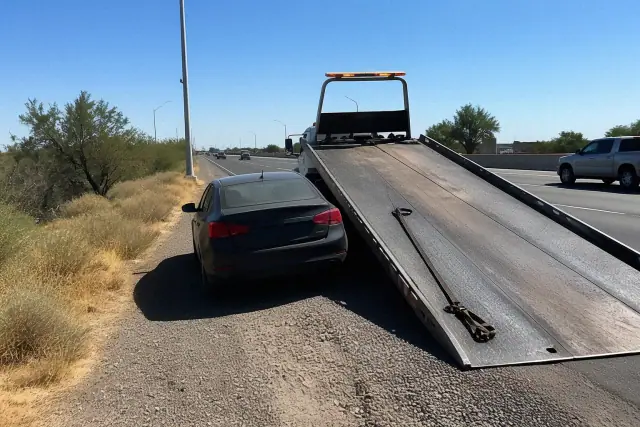
A tow truck with a hydraulic bed loading a disabled vehicle on a roadside in Goodyear, AZ.

Dispatch is available around the clock for breakdowns that do not wait for normal business hours. Whether a vehicle stops near Goodyear Ballpark or a trailer problem develops on I-10 at 4 a.m., we gather the details and send equipment matched to the call.

Explore Service

Emergency Towing

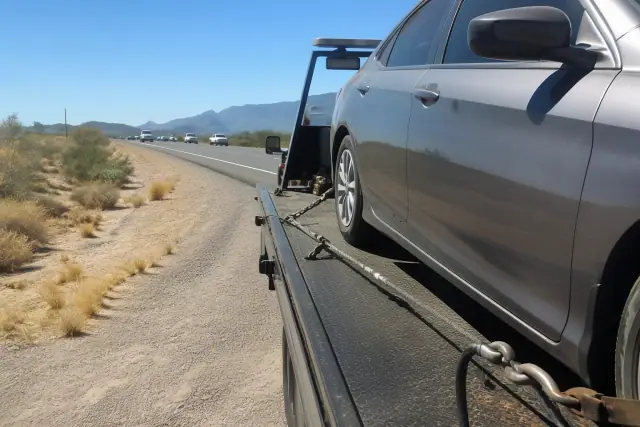
A disabled vehicle being secured to a tow truck bed on a highway shoulder in Goodyear, AZ.

Emergency towing prioritizes disabled vehicles blocking travel lanes or creating an immediate roadside hazard. The driver performs a safety assessment before hookup and follows Arizona Department of Transportation guidance for clearing active lanes quickly.

Explore Service

Roadside Assistance

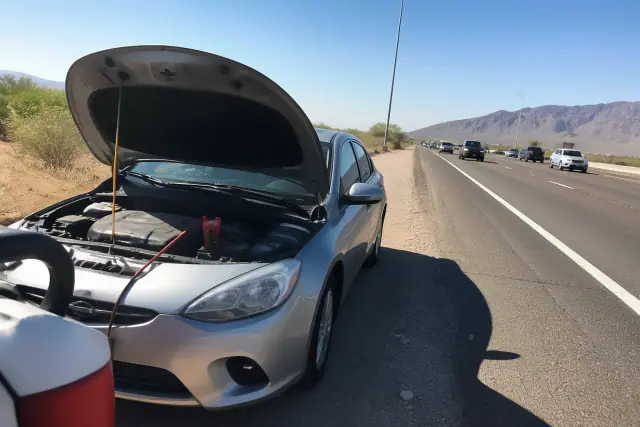
A disabled car with its hood open and jumper cables on a gravel highway shoulder in Goodyear, AZ.

Roadside assistance covers flat tire changes, minor fuel delivery, jump starts, and quick diagnostics at the vehicle. With the right tools and a tow-free solution, most drivers can be back on the road in under an hour.

Explore Service

Flatbed Towing

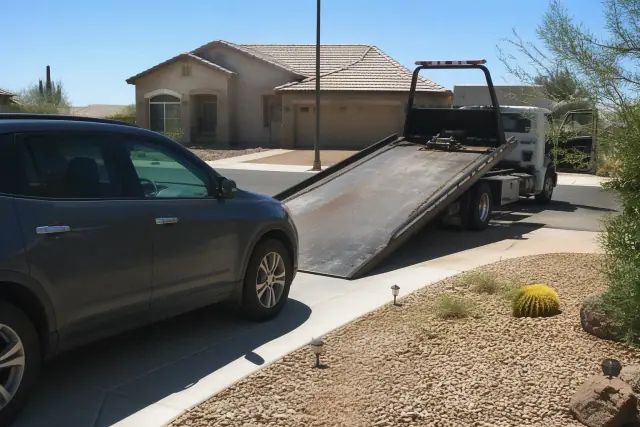
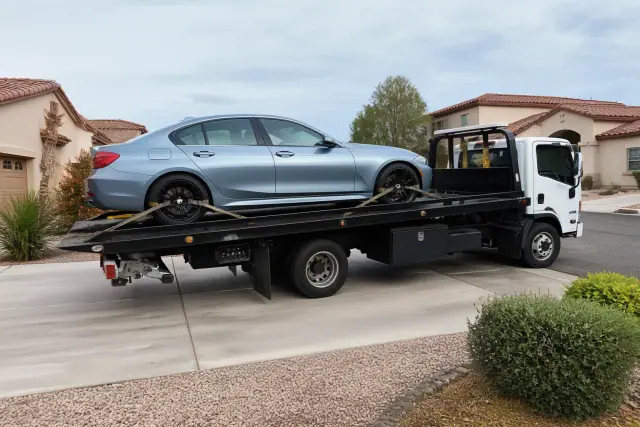
A vehicle being loaded onto a flatbed tow truck on a concrete driveway in Goodyear, AZ.

Flatbed towing lifts all four wheels off the pavement, reducing drivetrain risk for lowered vehicles, all-wheel-drive systems, and vehicles with suspension or transmission trouble. Hydraulic tilt beds and winches handle passenger vehicles and light trucks without forcing damaged wheels to roll.

Local Towing

A car secured with wheel straps on a flatbed tow truck in a residential driveway in Goodyear, AZ.

Local towing moves vehicles within Goodyear to a repair shop, home, or dealership using light-duty flatbed or wheel-lift equipment. Loading and securement can often take under fifteen minutes, and most local tows within city limits are completed from start to finish in under an hour.

Long Distance Towing

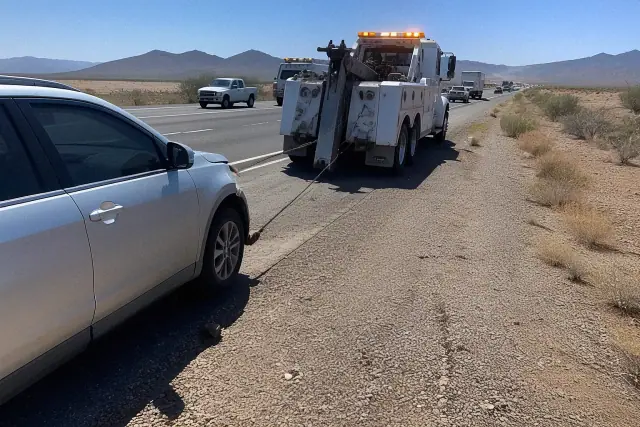
A tow truck with flashing lights hooked to a disabled vehicle on a gravel shoulder in Goodyear, AZ with mountains behind.

Long-distance towing extends toward Phoenix, Glendale, Surprise, Gila Bend, and other destinations beyond the standard radius. Mileage and route are quoted clearly before dispatch so the destination plan is settled before the truck rolls.

Accident Recovery

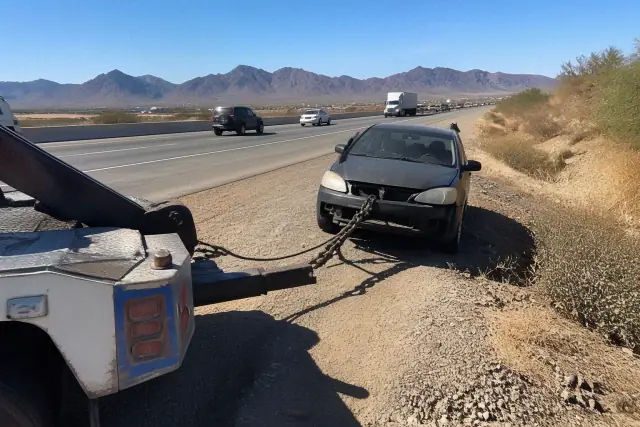
Disabled vehicle on a highway shoulder with winch cables attached during an accident recovery in Goodyear, AZ.

Accident recovery crews coordinate with responding officers, follow Arizona Department of Public Safety scene-clearance procedures, and work to reduce secondary-crash exposure. Vehicle condition is photographed before and after loading to support insurance records.

Motorcycle Towing

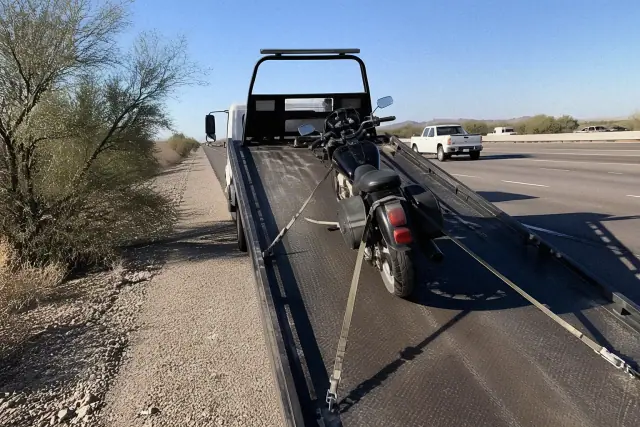
Motorcycle being secured with tie-down straps on a flatbed tow truck on a roadside in Goodyear, AZ.

Motorcycles are loaded on a flatbed with motorcycle-specific wheel chocks and tie-down straps that protect fairings and forks. We do not drag or wheel-lift a motorcycle because those methods can damage the frame or suspension.

Jump Start Service

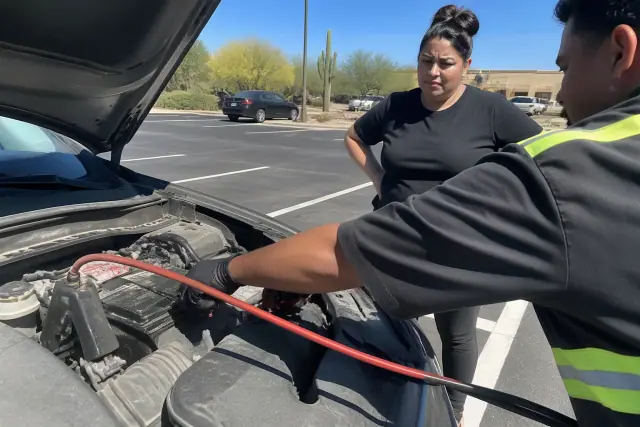
A technician jump-starting a car with jumper cables in a sunny parking lot in Goodyear, AZ.

Commercial-grade booster packs can start most passenger vehicles and light trucks without using another car for a cable jump. Most Goodyear jump starts are completed in under thirty minutes after the truck arrives; if the battery will not recover, we can arrange a tow.

Car Lockout Service

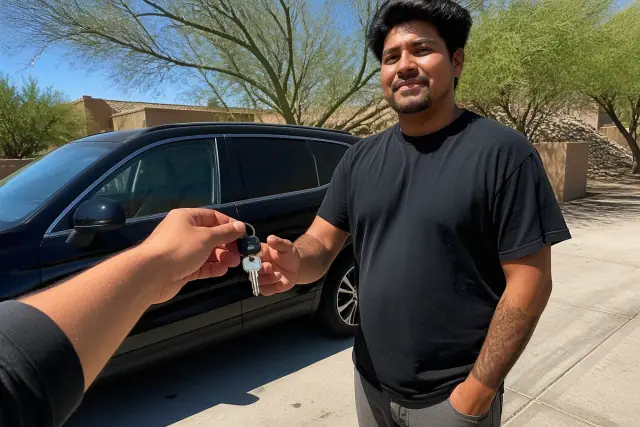
Technician handing keys to a customer next to a car on a driveway in Goodyear, AZ.

Car lockout service uses non-destructive entry methods intended to protect the door frame and lock mechanism, avoiding drilling whenever possible. Lockout help follows the same 24/7 schedule as towing and roadside assistance.

Choosing a Tow

Choosing the Right Tow in Goodyear

The safest response depends on vehicle weight, drivetrain, damage, location, road conditions, and destination. A clear dispatch conversation helps determine whether the call needs roadside help, a wheel lift, a flatbed, or recovery equipment before a truck leaves.

Match the Truck to the Vehicle

A compact sedan, loaded pickup, motorcycle, and commercial work van require different capacity and rigging. We assess vehicle weight, load, and terrain so the selected truck stays within our light- and medium-duty capacity.

Choose a Safe Tow Method

Flatbeds are preferred when a vehicle is not rolling freely, sits low, or uses an all-wheel-drive system. Wheel-lift towing can suit other light-duty calls when the vehicle condition and drivetrain allow it.

Account for Roadside Conditions

Traffic on I-10 and Loop 303, narrow shoulders, monsoon rain, and sudden dust storms all affect truck positioning and hookup. The driver evaluates the scene before loading to keep the disabled vehicle clear of moving traffic.

Confirm Pricing Before Dispatch

National average towing costs run around $109 for a standard tow, with typical per-mile rates between $2.50 and $4.75. Goodyear municipal tow programs list base rates starting near $117 for the first six miles plus roughly $6.95 per additional mile, and we work within that market range while explaining the quote before dispatch.

Get an Arrival Window

After confirming the location and situation, dispatch provides an estimated arrival window before the truck leaves. That gives the driver a practical expectation while waiting at a home, parking lot, surface street, or highway shoulder.

Plan the Drop-Off

Confirm whether the destination is a repair shop, your home, or a dealership before loading begins. For longer moves, settle the route and mileage in advance so the driver and customer share the same plan.

Goodyear Driving Hazards

Common Causes of Roadside Trouble

Triple-digit heat, heavy commuter traffic, haboobs, and sudden monsoon rain can disable vehicles or make an ordinary breakdown more dangerous. Recognizing the likely problem helps dispatch send useful equipment instead of losing time to a mismatched response.

Request Roadside Help

Heat-Weakened Batteries

Summer heat above 110 degrees accelerates battery failure, and jump-start calls rise between May and September. A commercial booster may restore the battery; if it does not, the vehicle can be towed to a preferred shop or battery retailer.

Heat-Related Tire Blowouts

Extreme pavement heat increases stress on tires, especially during long drives through the I-10 and Loop 303 corridors. Roadside crews can change a usable spare or arrange a tow when the wheel, tire, or suspension is not safe to drive.

Overheating and Belt Failure

High undercarriage temperatures strain cooling systems and belts, turning a warning light or snapped belt into a disabled vehicle. Continuing to drive can worsen the problem, so the dispatcher helps determine whether towing is the safer option.

Dust Storms and Monsoon Rain

Haboobs can cut visibility to near zero within minutes on Estrella Parkway, Yuma Road, and other open stretches. Monsoon downpours add slick pavement and poor sightlines, making careful truck positioning part of the response.

Collision-Damaged Vehicles

A collision can leave steering, suspension, or body damage that prevents a normal tow. Recovery crews assess the scene, coordinate with officers when present, and use the rigging needed to clear the vehicle safely.

Vehicle Lockouts

Keys locked inside a vehicle can strand a driver at home, in a shopping center, or late at night. Trained non-destructive entry techniques are used to open the vehicle while protecting the door frame and lock whenever possible.

Why Choose Us

Why Goodyear Drivers Choose Phoenix Towing Co.

Our dispatch process starts with useful questions and continues with vehicle-matched equipment, scene assessment, secure loading, and a clear destination plan. Around-the-clock coverage, transparent pricing, and documented accident recovery support drivers across Goodyear and the West Valley.

Around-the-Clock Dispatch

Calls are handled every hour of every day without seasonal gaps or reduced weekend coverage. The dispatcher confirms the location, nearest cross streets, vehicle, and roadside situation before sending a truck.

Vehicle-Specific Equipment

Light-duty flatbeds, wheel-lift trucks, soft straps, wheel nets, winches, motorcycle chocks, and recovery gear support different vehicle conditions. Matching equipment to the vehicle helps avoid cosmetic, drivetrain, frame, and suspension damage.

Clear, Safety-Focused Service

Drivers use high-visibility gear and position trucks according to Arizona Department of Transportation shoulder-safety guidance. If the work differs from the phone quote, the driver explains the change before proceeding and provides an itemized breakdown.

Six Clear Steps

How a Goodyear Tow Works

Every tow begins with a phone call that replaces guesswork with the details needed for a safer dispatch. From location confirmation through payment, each step keeps the vehicle, method, destination, and charges clear.

01.

Confirm Your Location

Dispatch confirms your GPS location and nearest cross streets so the driver can find the vehicle without unnecessary delay.

02.

Describe the Vehicle

Share the vehicle type and roadside situation so dispatch can match the truck, capacity, and equipment, then provide an estimated arrival window.

03.

Assess the Vehicle

On arrival, the driver checks the vehicle, damage, load, terrain, and traffic exposure before confirming the tow method.

04.

Load and Secure

The vehicle is loaded with flatbed or wheel-lift equipment and secured with straps, wheel nets, or specialized motorcycle rigging suited to its type.

05.

Confirm the Destination

Before transport, confirm the repair shop, home, dealership, fleet lot, or other agreed destination with the driver.

06.

Review the Breakdown

Paperwork and payment are handled on-site with a clear, itemized breakdown, and any difference from the phone quote is explained before work proceeds.

Service Results

Towing Outcomes for Drivers and Fleets

Case Study 1: Safer roadside clearance: A disabled vehicle is assessed, positioned for hookup, and moved away from an active travel lane with attention to secondary-crash risk.

Case Study 2: Vehicle-matched transport: Flatbeds, wheel lifts, soft straps, wheel nets, and motorcycle rigging protect the drivetrain, wheels, bodywork, and suspension during loading.

Case Study 3: Reduced fleet downtime: Commercial calls can be coordinated with fleet managers around operating hours, billing needs, and the requested drop-off location.

Need a Tow?

Get Goodyear
Tow Truck
Help

Tell dispatch where you are, what you drive, and what happened. We will match the call to roadside assistance, a flatbed, a wheel lift, or recovery equipment and explain the expected arrival window and charges.

Goodyear Towing Help

FAQs About Towing in Goodyear, AZ

These answers cover service hours, tow methods, roadside help, pricing, vehicle types, coverage, and the information dispatch needs. Call if your situation involves traffic exposure, collision damage, or a vehicle that cannot roll safely.

Call Towing Dispatch

Yes. Dispatch operates 24 hours a day, seven days a week for towing, roadside assistance, jump starts, and car lockouts. Coverage does not drop on weekends or after dark.

Cost depends on the tow method, mileage, vehicle size, location, recovery needs, and destination. Dispatch explains the expected charge before the truck leaves, and any on-scene difference is reviewed before work proceeds.

A flatbed is recommended when the vehicle does not roll freely, sits low, has existing suspension or transmission damage, or uses an all-wheel-drive system. Keeping every wheel off the road reduces the risk of drivetrain damage during transport.

Roadside crews can provide flat tire changes, minor fuel delivery, jump starts, and quick diagnostics. If the vehicle cannot be made safe to drive, the call can transition to towing.

Yes. Commercial-grade booster packs can start most passenger vehicles and light trucks without another car. If heat has damaged the battery beyond recovery, the driver can arrange a tow to your preferred repair shop or battery retailer.

Motorcycles are loaded onto a flatbed with wheel chocks and tie-down straps designed for two-wheel transport. They are not dragged or wheel-lifted because those methods can harm the frame, forks, or suspension.

The crew evaluates vehicle damage, traffic exposure, and the rigging needed to clear the scene. When officers are present, the crew coordinates with them, follows scene-clearance procedures, and photographs vehicle condition for insurance records.

Yes, within the fleet's light- and medium-duty capacity. Dispatch assesses gross vehicle weight, load, terrain, and clearance before choosing flatbed or recovery equipment, and fleet managers can coordinate billing and drop-off details.

Timing depends on traffic, location, vehicle condition, hookup complexity, and destination. Dispatch provides an estimated arrival window, and the driver confirms the method after evaluating the vehicle on-site.

Coverage includes Verrado, PebbleCreek, Palm Valley, Canyon Trails, Estrella, the Wigwam corridor, and industrial areas near Phoenix Goodyear Airport. Regional service also reaches Avondale, Litchfield Park, Buckeye, and Tolleson.

Yes. Long-distance coverage extends toward Phoenix, Glendale, Surprise, Gila Bend, and destinations beyond the standard radius. Mileage and route are quoted before dispatch.

Provide your GPS location or nearest cross streets, vehicle type, roadside situation, and any known damage or load details. That information helps dispatch choose the appropriate truck, tow method, and equipment.

Yes. The destination can be a repair shop, your home, a dealership, a fleet lot, or another agreed location. Confirm the destination before transport begins, especially when the route extends beyond Goodyear.

The driver assesses visibility, traffic, shoulder space, and pavement conditions before positioning the truck. High-visibility gear and careful scene placement are especially important during haboobs and sudden downpours.

Drivers use non-destructive entry techniques and avoid drilling whenever possible. The goal is to open the vehicle while protecting the door frame and lock mechanism.