Proudly serving Phoenix, Glendale, Scottsdale, Tempe, Mesa, Chandler & surrounding areasCall or Text 24/7: 480-245-5233
Aerial drone view of the urban landscape, foothills, and residential sprawl in Phoenix, AZ.

Long Distance Towing and Cross-State Vehicle Transport from Phoenix, AZ

Phoenix Towing Co. provides long distance towing from Phoenix for in-state and cross-state moves, along with flatbed towing, local towing, and roadside assistance. For moves generally defined as 100 miles or more, our own crews coordinate pickup and delivery so you have one point of contact from dispatch to drop-off. Dispatch matches the truck to the vehicle's drivetrain, ground clearance, size, condition, and route.

Phoenix pavement temperatures regularly climb past 150 degrees in summer, placing severe stress on belts, hoses, batteries, and tires along Interstate 10 and Interstate 17. A breakdown 80, 150, or 400 miles from home requires safe positioning, the right towing method, and a planned destination. GPS-tracked mobile units help dispatch identify an available truck and begin coordinating the route.

Serving the Phoenix metro since 1994, our crews handle both routine vehicle moves and recovery situations. Trucks are DOT-compliant and operators are licensed, insured, and trained in damage-free loading and industry-standard J-hook, axle-strap, and tie-down procedures.

Phoenix Towing Co. provides long distance towing from Phoenix throughout Mesa, Gilbert, Scottsdale, Tempe, Chandler, Glendale, and greater Maricopa County.

★ ★ ★ ★ ★4.9/5 Average Rating · 20+ Years of Experience · Thousands of Customers Helped · Licensed & Insured · Residential & Commercial

Long Distance Towing Options & Benefits

What Is Long Distance Towing?

Long distance towing moves a disabled, damaged, specialty, or commercial vehicle beyond a routine local service area. Once a trip reaches the long-distance range, equipment choice and route planning matter as much as the initial hookup.

Our dispatchers review vehicle type, drivetrain, ground clearance, pickup conditions, destination access, and total mileage before assigning equipment. Flatbed service is preferred when the vehicle must remain fully off the roadway, while wheel-lift equipment may suit straightforward short local moves.

Interstate trips also require planning for weather, construction, fuel stops, and federal driver hours-of-service limits. When a route calls for it, we arrange a relief driver and keep the same in-house coordination from pickup through final delivery.

Benefits of a Planned Long Distance Tow

A properly planned tow protects the vehicle, gives the driver a clear route and destination, and reduces uncertainty during a multi-hour move. The details below guide our equipment and transport decisions.

  • Flatbed transport keeps all four wheels above the road surface
  • Vehicle-specific loading reduces tire, drivetrain, and suspension strain
  • Four-point securement uses approved frame or lift points
  • Route checks account for weather, closures, construction, and rest points
  • GPS tracking supports dispatch coordination and longer-haul updates
  • In-house crews provide one point of contact from pickup to delivery
  • Upfront quotes identify loading, mileage, and equipment charges
  • Destination walk-arounds confirm the vehicle's arrival condition
Phoenix Towing Services

Long Distance Towing Services

Our Phoenix crews handle passenger vehicles, specialty vehicles, commercial trucks, roadside breakdowns, and accident recoveries. Each service begins with the vehicle and route details needed to select a safe towing method.

24 Hour Emergency Long Distance Towing

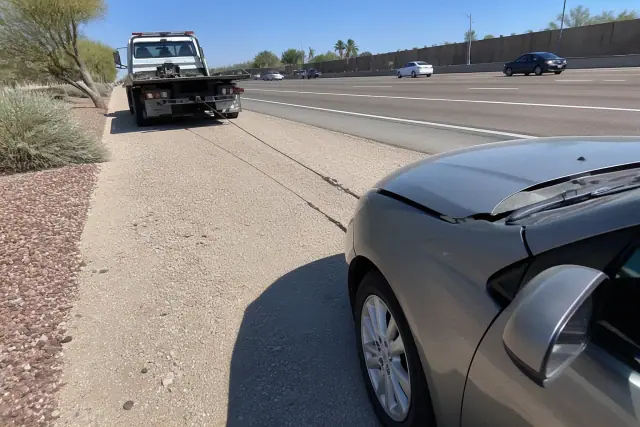
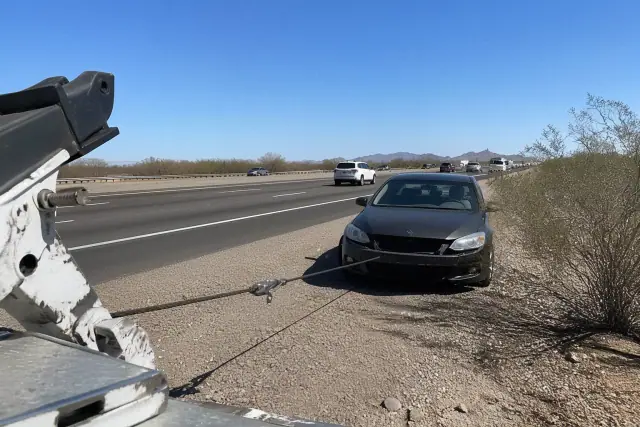
A disabled car connected to a tow truck winch on a gravel shoulder in Phoenix, AZ.

Our 24/7 dispatch coverage handles breakdowns at 2 p.m. on Loop 101 or 3 a.m. near Sky Harbor, including weekends and holidays. GPS-tracked units help dispatch coordinate an available operator without adding a calendar-day upcharge.

Request Estimate

Flatbed Towing for Long Distance Moves

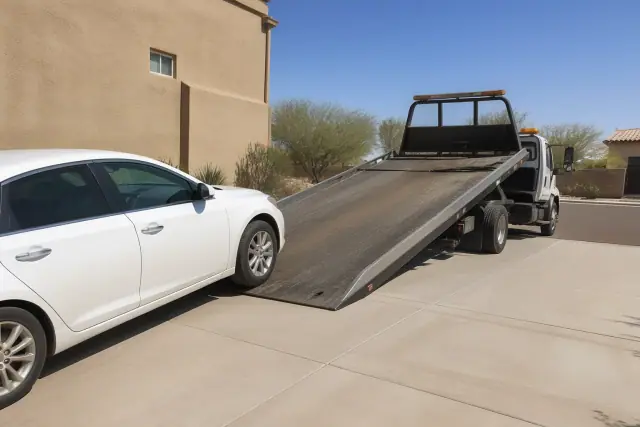
A vehicle parked on a residential driveway in Phoenix, AZ, prepared for winching onto a flatbed tow truck.

Flatbed towing carries the entire vehicle above the roadway and is almost always the safer choice for a tow over 50-60 miles. It is especially important for all-wheel-drive, four-wheel-drive, low-clearance, classic, and modified vehicles.

Request Estimate

Interstate and Cross-State Towing

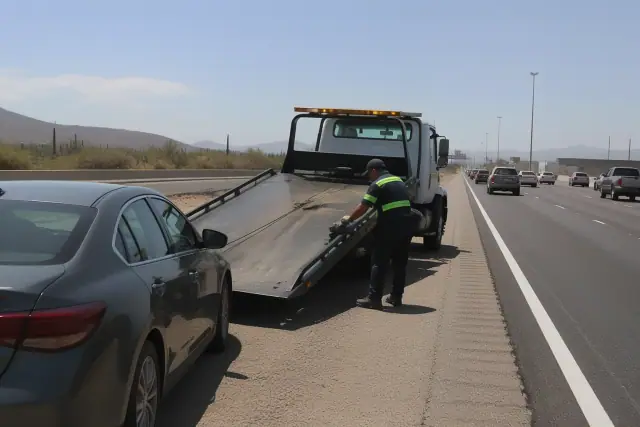
Interstate and Cross-State Towing truck with a tilted hydraulic bed helping a disabled car on a Phoenix, AZ highway.

There is no fixed mileage ceiling when the vehicle, route, and driver-hour requirements support the move. Our crews regularly plan trips well beyond 300 miles, including destinations in California, Nevada, and New Mexico, with fuel stops and relief drivers when needed.

Request Estimate

Medium and Heavy Duty Towing

A heavy-duty tow truck hitched to a disabled vehicle on a gravel shoulder in Phoenix, AZ.

Medium-duty service covers work vans, larger pickups, and box trucks under roughly 26,000 pounds, while heavy-duty towing covers Class 6-8 trucks and commercial vehicles. Dispatch selects higher-capacity wheel-lifts, flatbeds, air-brake-compatible connections, or rotator equipment based on the job.

Request Estimate

Accident Recovery and Winch-Assisted Extraction

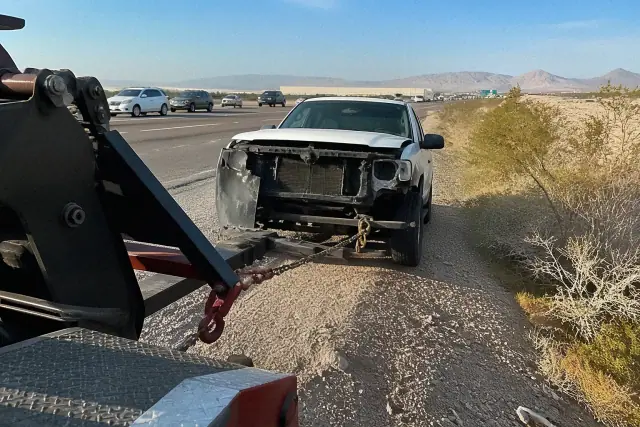
A disabled vehicle being recovered by a winch on a gravel highway shoulder in Phoenix, AZ.

Accident recovery begins with vehicle position, roadway hazards, and loading access. Operators can document existing damage, coordinate with Arizona Department of Public Safety or Phoenix Police Department units on scene, and use rated winch cables and snatch blocks when a vehicle must be extracted before loading.

Request Estimate

Roadside Assistance and Local Towing

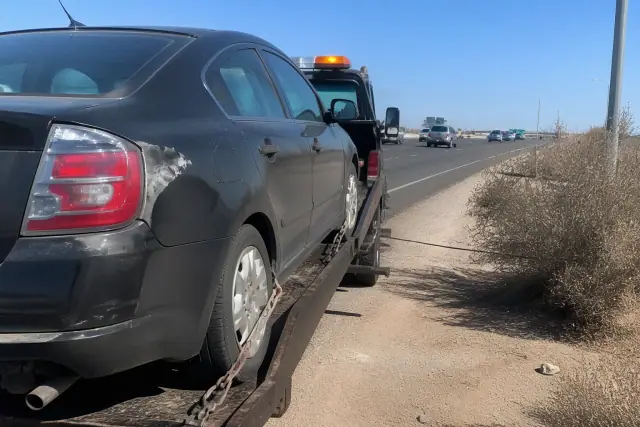
Disabled vehicle secured to a tow truck on a highway shoulder in Phoenix, AZ.

Dispatch first determines whether the vehicle needs a long distance tow or a faster roadside solution such as a jump start or car lockout service. Straightforward local towing can use wheel-lift equipment when the vehicle and distance make that method appropriate.

Request Estimate
Vehicle and Equipment Fit

Vehicle and Transport Options

The safest transport method depends on how the vehicle distributes power, its weight and clearance, and whether accident damage affects rolling or steering. These vehicle groups show why dispatch asks detailed questions before sending a truck.

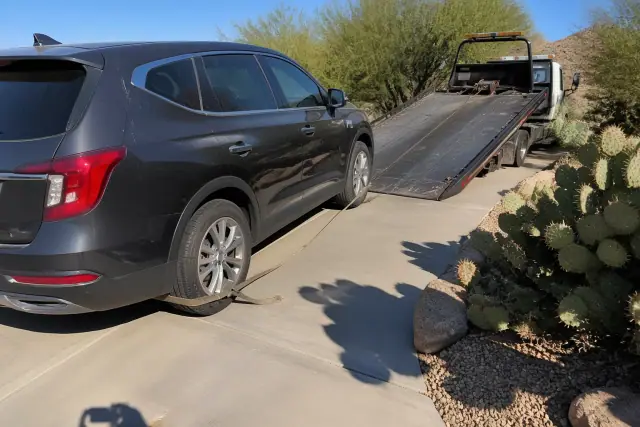
A vehicle being loaded onto a tow truck in a residential driveway with desert landscaping in Phoenix, AZ.

Sedans, SUVs, and Pickups

Daily drivers make up many long distance towing requests, but their drivetrain, weight, condition, and destination still determine the equipment. A vehicle that rolls freely may load differently from one with collision or suspension damage.

  • Sedan towing
  • SUV transport
  • Pickup truck towing
  • Mechanical-breakdown transport
  • Accident-damaged vehicle loading
Request Estimate
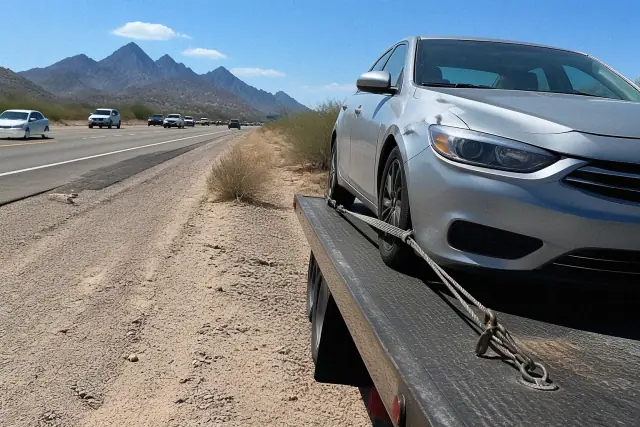
A disabled vehicle being loaded onto a flatbed tow truck on a roadside in Phoenix, AZ.

All-Wheel-Drive, Four-Wheel-Drive, and Low-Clearance Vehicles

Flatbed transport prevents wheel-on-road drivetrain stress for all-wheel-drive and four-wheel-drive vehicles. It also avoids the approach-angle problems that make wheel-lift towing unsuitable when a sports car or modified vehicle has ground clearance under a few inches.

  • All-wheel-drive drivetrain protection
  • Four-wheel-drive transfer-case protection
  • Low-angle flatbed loading
  • Manufacturer-approved lift points
  • Full-vehicle road clearance
Request Estimate
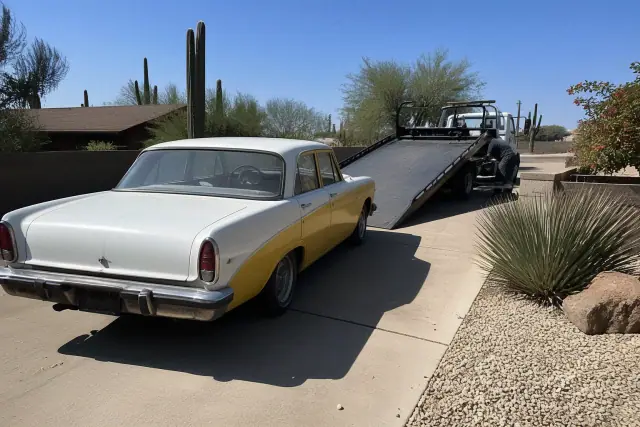
Vehicle being winched onto a tow truck on a driveway in Phoenix, AZ, with desert landscaping in the background.

Motorcycles, Classic Cars, and Modified Vehicles

Specialty vehicles require securement that accounts for paint, suspension, weight class, and modified bodywork. Motorcycles use wheel chocks and soft-tie systems, while classic and lowered cars ride fully on a flatbed.

  • Motorcycle wheel chocks
  • Weight-rated soft ties
  • Classic-car flatbed transport
  • Lowered-suspension loading
  • Paint-conscious securement
Request Estimate
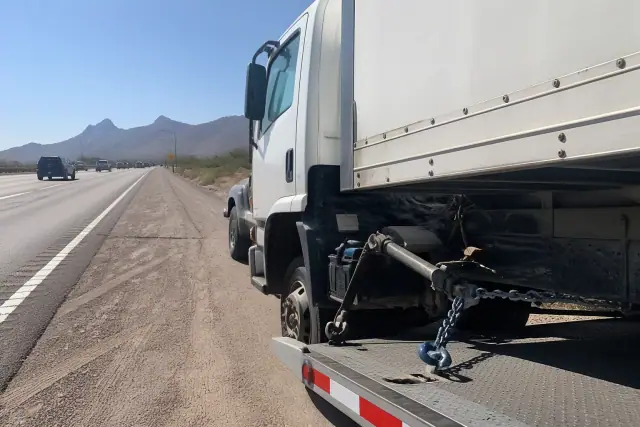
Medium-duty commercial vehicle being secured by chains on a roadside in Phoenix, AZ.

Medium-Duty Commercial Vehicles

Work vans, box trucks, larger pickups, and vehicles with attached trailers can require different hookup points and axle-weight planning than a passenger car. Dispatch reviews the vehicle and load before assigning medium-duty equipment.

  • Work van towing
  • Box truck transport
  • Large pickup recovery
  • Trailer-aware equipment selection
  • Axle-weight and tie-down planning
Request Estimate
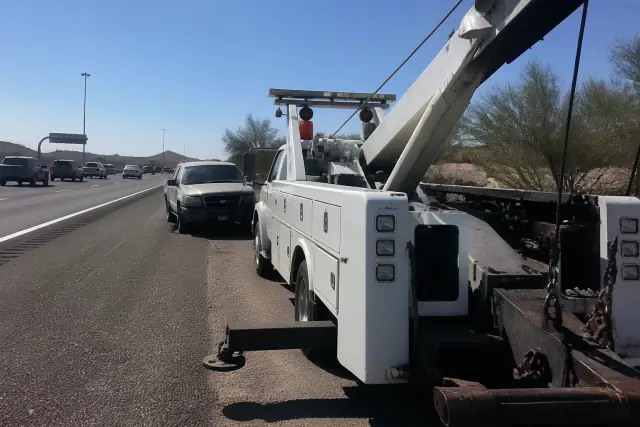
Heavy-duty tow truck performing a recovery on a disabled vehicle on a highway shoulder in Phoenix, AZ.

Heavy-Duty Trucks and Recovery

Heavy truck towing requires operators familiar with commercial-vehicle recovery, air-brake systems, and higher gross vehicle weights. Equipment is maintained to Arizona Department of Transportation commercial vehicle standards and inspected on a recurring schedule.

  • Heavy-duty flatbed service
  • Hydraulic wheel-lift systems
  • Air-brake-compatible tow connections
  • Rotator-assisted recovery
  • Commercial vehicle route planning
Request Estimate
Finding the Right Tow Method

Choosing the Right Long Distance Tow Approach

The right approach balances vehicle protection, route requirements, and an understandable quote. Our dispatch process keeps responsibility with one crew while matching equipment and pricing details to the actual move.

One Point of Contact

We do not outsource long distance runs to unknown subcontractors. Our own crews handle pickup and delivery, keeping dispatch, status updates, and destination coordination connected throughout the job.

Vehicle-Specific Equipment

A low-clearance sports car, motorcycle, all-wheel-drive SUV, box truck, and accident-damaged vehicle do not share the same loading needs. Dispatch assigns flatbed, wheel-lift, winch, or heavy-duty equipment after reviewing the vehicle and scene.

Upfront Quote Details

Your quote is provided before the truck leaves and identifies the loading fee, mileage rate, and any flatbed or equipment surcharge. Costs known at dispatch are not added or renegotiated at the destination.

What Sets Us Apart

Why Choose Phoenix Towing Co. for Long Distance Towing?

Operators complete hands-on training in vehicle recognition, safe hookup, and load securement. Licensing is current with Arizona Department of Public Safety requirements, insurance coverage meets state towing-carrier requirements, and DOT numbers support interstate work under Federal Motor Carrier Safety Administration rules.

Request a Tow Quote

Extreme Phoenix Heat

Desert heat loads can expose weak belts, hoses, batteries, and tires while a vehicle is far from its normal repair shop. Long distance service coordinates safe pickup and transport instead of leaving the driver to piece together multiple local tows.

All-Wheel-Drive Drivetrain Risk

Towing an all-wheel-drive or four-wheel-drive vehicle with wheels on the roadway can place the transfer case and drivetrain at risk. Flatbed transport removes that rolling load and keeps the full vehicle off the road.

Low Ground Clearance

Low-profile sports cars, classic cars, and modified vehicles can scrape during an unsuitable hookup or loading angle. A flatbed and vehicle-specific lift points protect bodywork, suspension, and undercarriage during loading and travel.

Long Interstate Routes

Construction and weather can change conditions on Interstate 10 toward Tucson or Interstate 17 toward Flagstaff. Longer routes may also require planned fuel stops, rest points, and a driver swap to stay within federal hours-of-service limits.

Accident and Off-Road Recovery

A vehicle in a soft shoulder, desert wash, median, or embankment may need winch-assisted extraction before it can be transported. Rated cable systems and snatch blocks help control the pull and limit added undercarriage or frame damage.

Complex Drop-Off Access

Gated communities, apartment complexes, repair shops, and dealership service bays may have access instructions or specific delivery windows. Confirming those details before departure helps prevent delays at the end of a long haul.

How It Works

Our Long Distance Towing Process

Each long distance move follows a practical sequence from vehicle assessment and route planning through secure loading and delivery. Clear information at the first call helps dispatch avoid sending equipment that does not fit the vehicle or recovery scene.

01.

Call and Vehicle Assessment

Tell dispatch the pickup location, destination, what happened, vehicle type, drivetrain, and whether it starts, rolls, or steers. Those details separate a roadside call from a true long distance tow and reveal special loading needs.

02.

Equipment Selection

Dispatch matches flatbed, wheel-lift, winch, medium-duty, or heavy-duty equipment to vehicle clearance, weight, drivetrain, and condition. The choice is made before arrival whenever the caller's information supports it.

03.

Route and Quote Confirmation

The team checks the travel corridor, construction, weather, driver-hour requirements, destination access, and estimated drive time. You receive the loading fee, mileage rate, and known equipment charges before the truck is dispatched.

04.

Damage Documentation and Loading

For an accident vehicle, the operator photographs existing damage and notes it on the tow receipt. Vehicles are loaded at approved points, secured with a four-point system, and chocked at the wheels before strap tension is finalized.

05.

Monitored Transport and Updates

On longer hauls, the operator checks tie-down tension again after the first mile because ratchet straps can settle. GPS coordination and phone or text updates keep you informed as the vehicle moves toward its destination.

06.

Destination Delivery and Walk-Around

The operator follows the confirmed access instructions and delivery window at the home, shop, dealership, or other destination. You or a designated contact completes a walk-around to confirm the vehicle arrived in the same condition in which it left.

Plan Your Tow

Request a Long Distance
Towing
Quote

Share the vehicle, pickup location, destination, condition, and access details with dispatch. We will match the equipment, plan the route, and provide the known loading, mileage, and equipment charges before the truck leaves.

Long Distance Towing Help

Phoenix Long Distance Towing FAQs

Review common questions about mileage, pricing, equipment, route planning, specialty vehicles, and delivery. Call with your exact vehicle and trip details for a job-specific quote.

Call Dispatch

A 100-mile tow typically runs $450-$800, while a 200-mile tow is roughly $650-$1,200, depending on vehicle weight, equipment, and route conditions. A Phoenix-to-Los Angeles move commonly falls in the $1,050-$1,950 range. Phoenix Towing Co. confirms the loading fee, per-mile rate, fuel surcharge, and known equipment charges before dispatch.

Wheel-lift towing can cost less when the vehicle can safely travel with wheels on the road, but flatbed transport is the safer choice for most longer moves and is required for all-wheel-drive or low-clearance vehicles. For very long distances, we will also tell you when vehicle shipping may make more financial sense than towing.

A standard local tow covering about 5-10 miles typically runs $75-$125, with additional mileage around $2.50-$5 per mile. Another common structure is a $65-$95 loading fee plus roughly $3 per mile. Traffic also matters, so a trip on Loop 202 during rush hour can price differently from the same distance at 4 a.m.; we quote the job before hookup.

There is no strict mileage ceiling when the vehicle, route, and federal driver hours-of-service requirements make the trip practical. Phoenix Towing Co. handles statewide moves and cross-state towing to places such as Tucson, Flagstaff, Las Vegas, and California, with fuel stops or a second driver when needed.

Flatbed towing is the better choice for nearly any tow over 50-60 miles because it removes every wheel from the roadway and avoids accumulated tire and drivetrain wear. Wheel-lift towing can work for short local moves on vehicles with compatible drivetrains, but it is not recommended for all-wheel-drive vehicles.

Provide the pickup location, destination, vehicle year and type, drivetrain, ground clearance concerns, and what happened. Tell dispatch whether the vehicle starts, rolls, steers, or has accident damage so the correct towing and recovery equipment can be selected.

Yes. These vehicles are matched to flatbed equipment so the drivetrain stays off the roadway and the loading angle can account for limited clearance. Dispatch asks about modifications and manufacturer-approved lift points before assigning the truck.

Yes. On longer hauls, the driver can provide phone or text status updates while dispatch uses GPS tracking to coordinate the trip. This keeps you informed about progress toward the confirmed destination.

Yes. Motorcycles use wheel chocks and weight-rated soft ties, while classic, modified, and lowered vehicles ride fully on a flatbed. The operator selects securement points that protect paint, forks, suspension, and bodywork.

Yes, when the stops can be coordinated as one route. For example, an accident vehicle may need to move from the recovery scene to an impound lot before final delivery, and dispatch can plan that sequence without treating it as two unrelated calls.

Yes. Vehicles can be delivered to a Phoenix address, repair shop, dealership service bay, apartment complex, or gated community. Share access instructions and delivery windows during dispatch so the driver can plan the final approach.

The operator follows the confirmed drop-off instructions and unloads at the agreed location. You or your designated contact then completes a walk-around to confirm the vehicle arrived in the same condition documented at pickup.

Yes. Medium-duty service covers work vans, larger pickups, and box trucks, while heavy-duty service supports larger commercial vehicles with higher-capacity wheel-lifts, flatbeds, air-brake-compatible connections, and rotator equipment. Dispatch reviews vehicle weight and configuration before assigning a commercial-vehicle operator.