Proudly serving Phoenix, Glendale, Scottsdale, Tempe, Mesa, Chandler & surrounding areasCall or Text 24/7: 480-245-5233
Aerial drone view of the urban landscape, foothills, and residential sprawl in Phoenix, AZ.

Emergency Towing and Accident Recovery Services in Phoenix, AZ

Phoenix Towing Co. provides emergency towing and 24 hour towing throughout Phoenix, Arizona. Drivers can call for roadside assistance, flatbed towing, local or long distance towing, accident recovery, and motorcycle towing when a vehicle will not move. Jump starts and car lockout service are also available for problems that may not require a full tow.

Phoenix summers can push pavement temperatures past 160 degrees, putting extra strain on batteries, tires, and cooling systems. Breakdowns and collisions also happen at all hours along I-10, I-17, and Loop 101. Dispatch tracks operator locations across the metro to assign the closest available truck. The operator then chooses flatbed, wheel-lift, or recovery equipment for the vehicle and roadside conditions.

Operators follow towing and recovery practices consistent with Arizona Department of Public Safety Tow Service Program standards. Phoenix Towing Co. maintains the licensing, insurance, and bonding required for legitimate towing operators in Maricopa County.

Phoenix Towing Co. provides emergency towing throughout Phoenix and the surrounding metro, including Scottsdale, Tempe, Mesa, Glendale, Chandler, and Peoria.

★ ★ ★ ★ ★4.9/5 Average Rating · 20+ Years of Experience · Thousands of Customers Helped · Licensed & Insured · Residential & Commercial

Emergency Towing Options & Benefits

What Is Emergency Towing?

Emergency towing moves a disabled, damaged, or stranded vehicle when it cannot continue safely under its own power. The service may involve a routine flatbed transport, an accident tow, or recovery from sand, gravel, a canal bank, or a soft shoulder.

Some calls can be resolved on-site with a jump start, battery replacement, tire change, fuel delivery, or non-destructive lockout service. When collision damage, drivetrain concerns, or the vehicle position makes roadside work inappropriate, the operator prepares the vehicle for transport.

Flatbed towing is the default method for most vehicles because the vehicle rides fully off the ground. Wheel-lift and winch equipment remain useful when vehicle clearance, damage, access, or recovery conditions require a different approach.

Benefits of Professional Emergency Towing

Professional towing pairs quick dispatch with equipment and securement practices chosen for the vehicle, location, and type of breakdown. That combination helps move the vehicle without adding avoidable tire, transmission, drivetrain, body, or paint damage.

  • 24/7 dispatch for breakdowns and collisions outside normal business hours
  • Closest-available-truck assignment across the Phoenix metro
  • Flatbed and wheel-lift equipment matched to the vehicle and drivetrain
  • Rated tie-down straps securing flatbed loads at four points
  • Winch equipment selected for vehicle weight and recovery conditions
  • Non-destructive lockout tools designed to protect seals and paint
  • Job documentation for accident recovery and service questions
  • A quote before dispatch with transparent pricing and no hidden fees
Complete Towing Services

Emergency Towing & Roadside Services

Phoenix Towing Co. handles urgent breakdowns, roadside problems, collision recovery, vehicle transport, and specialty towing across the Salt River Valley. Coverage runs 24/7, and same day towing service remains available across the coverage area every day of the week.

24 Hour Emergency Towing

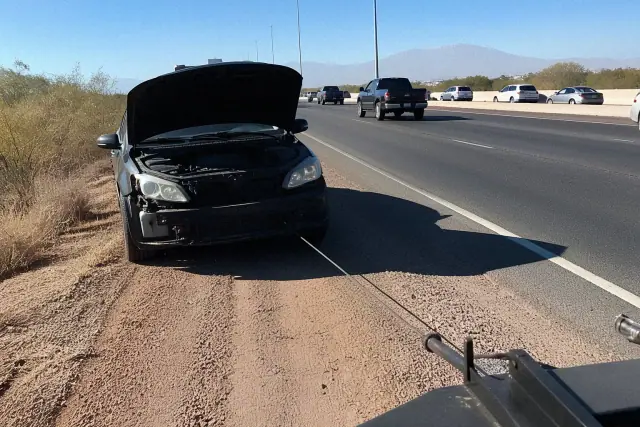
Disabled sedan secured by a winch cable onto a flatbed tow truck on a roadside shoulder in Phoenix, AZ.

A dead battery at 2 a.m. on an I-17 shoulder calls for the same immediate dispatch attention as a midday breakdown on a surface street. Operators respond around the clock to no-starts, blowouts, overheating, collisions, and other situations that leave a vehicle unable to continue.

Request Estimate

Roadside Assistance

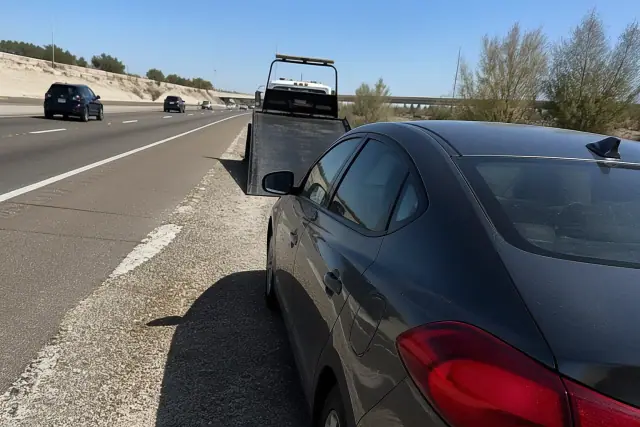
Roadside assistance vehicle recovering a disabled car on a highway shoulder in Phoenix, AZ with desert mountains behind.

An operator can diagnose the problem on-site and determine whether a jump start, battery replacement, tire change, fuel delivery, or vehicle lockout service can get the driver moving. If the problem needs more than a roadside fix, the same call can transition to a tow.

Request Estimate

Flatbed Towing

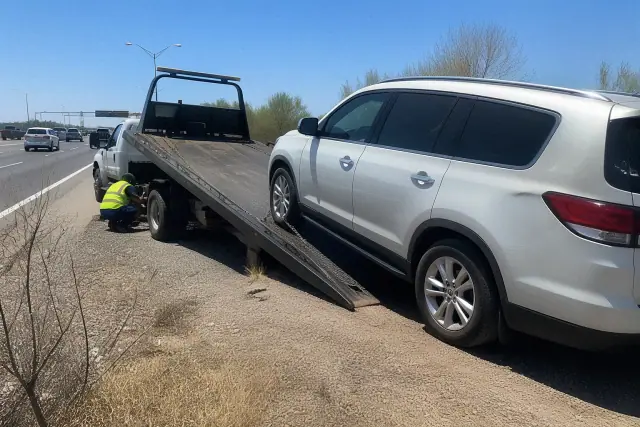
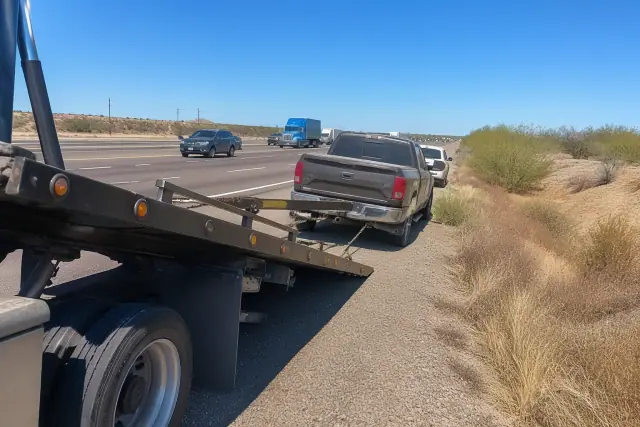
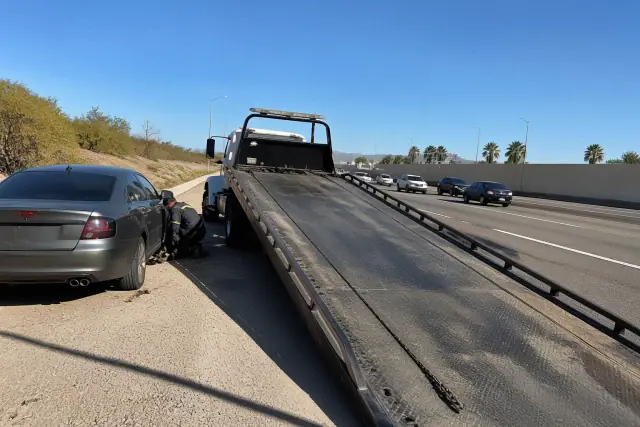
Flatbed tow truck loading a disabled vehicle on a sunny highway shoulder in Phoenix, AZ.

A hydraulic flatbed carries the vehicle fully off the road, reducing wear on tires, transmissions, and drivetrains. It is especially well suited to all-wheel-drive vehicles, lowered cars, classics, and vehicles with limited ground clearance.

Request Estimate

Accident & Vehicle Recovery

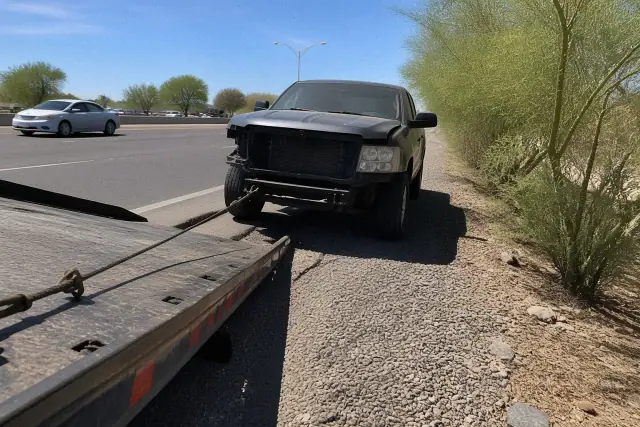
Disabled vehicle hooked to a tow truck on a highway shoulder in Phoenix, AZ, with traffic in the background.

After a collision, operators document vehicle position and visible damage before hookup and coordinate with Phoenix Police Department units when needed. For vehicles off pavement, rated winch cable or synthetic rope supports recovery from sand, desert washes, canal banks, and soft shoulders.

Request Estimate

Long Distance Towing

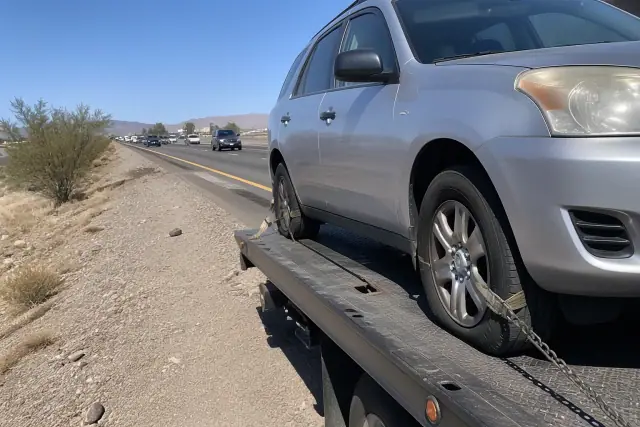
A disabled vehicle secured by chains and straps onto a flatbed tow truck on a highway shoulder in Phoenix, AZ.

Long-distance transport requires route mapping, fuel planning, driver rest, and repeated securement checks. On trips such as an I-8 route toward San Diego, strap tension is re-checked at fuel stops so the vehicle remains secure over the extended distance.

Request Estimate

Heavy-Duty & Specialty Towing

Heavy-duty tow truck with a lowered hydraulic bed recovering a disabled vehicle on a highway shoulder in Phoenix, AZ.

Commercial vehicles, heavy trucks, and oversized loads require equipment rated beyond a standard passenger tow truck. Service also covers motorcycles, low-clearance and custom vehicles, boat trailers, ATVs, and utility or cargo trailers disabled on the road.

Request Estimate
Towing & Recovery Options

Equipment for Different Towing Needs

The right response depends on whether the vehicle can roll, its drivetrain and clearance, the damage or roadside problem, the terrain around it, and the requested destination. These options let the operator match roadside service, transport, or recovery equipment to the actual call.

A disabled vehicle being towed on a highway shoulder with desert brush in the background in Phoenix, AZ.

Roadside Assistance Options

When a problem can be handled safely on-site, roadside assistance may avoid a full tow. Operators arrive prepared for common no-start, tire, fuel, and access problems.

  • Heavy-duty jump boxes rated for larger trucks and SUVs
  • Battery replacement service and no-start diagnosis
  • Tire changes after flats and blowouts
  • Fuel delivery when the tank runs dry
  • Lockout entry with air wedges and long-reach tools
Request Estimate
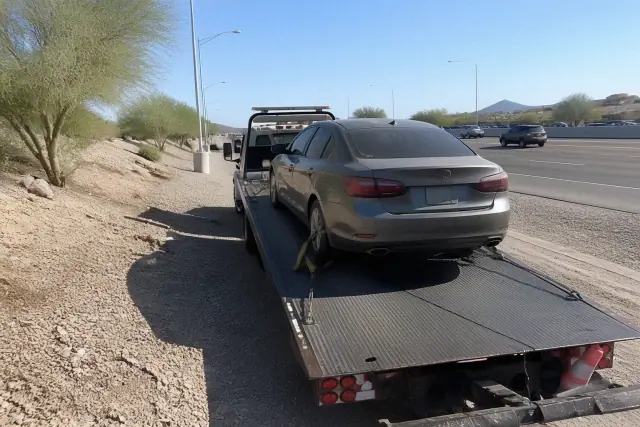
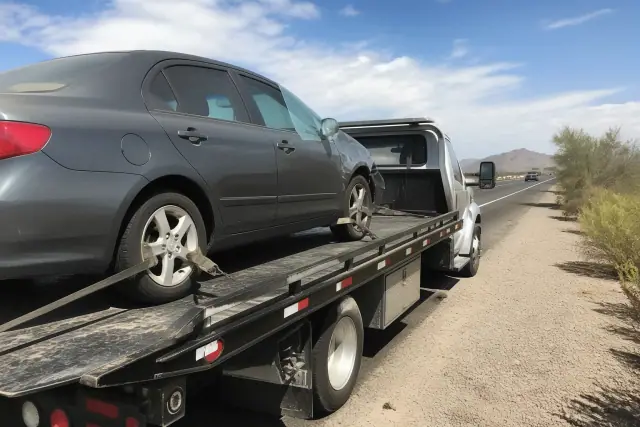
A car secured on a flatbed tow truck on a desert roadside in Phoenix, AZ.

Flatbed Transport Options

A hydraulic bed brings the vehicle fully onto the truck so its tires and drivetrain do not roll during transport. Loading and securement are adjusted for the vehicle design and trip.

  • Rated straps securing the vehicle at four points
  • Full off-ground transport for all-wheel-drive and lowered vehicles
  • Fold-down ramps and shallow approach angles for low clearance
  • Careful loading for classic, show, and modified vehicles
  • Open or enclosed flatbed configurations based on value and weather exposure
Request Estimate
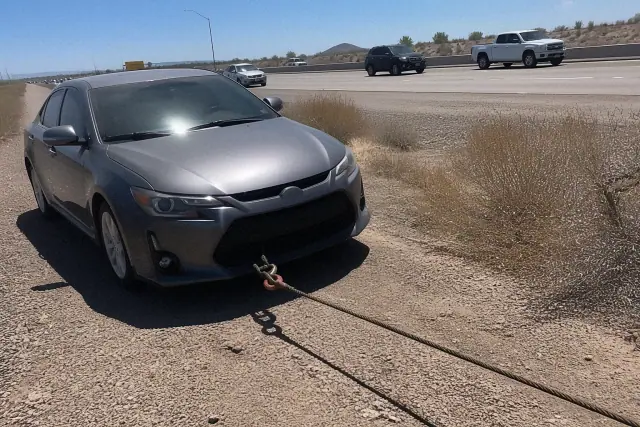
A disabled vehicle being recovered by a tow truck on a gravel highway shoulder in Phoenix, AZ.

Accident & Winch Recovery

Collision and off-pavement calls require more scene evaluation than a straightforward hookup. Documentation, recovery direction, ground conditions, and vehicle weight all affect the setup.

  • Vehicle position and damage documented before hookup
  • Coordination with responding Phoenix Police Department units when needed
  • Insurance-approved towing paperwork for accident claims
  • Cable or synthetic rope rated for the vehicle gross weight
  • Recovery from washes, canal banks, sand, gravel, and soft shoulders
Request Estimate
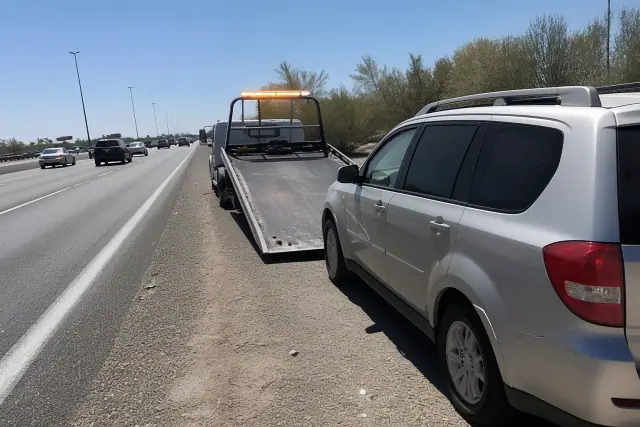
A disabled car parked on a gravel highway shoulder during a sunny day in Phoenix, AZ.

Local & Long-Distance Towing

Local and extended transports use the same careful securement, but longer routes add fuel, rest, and route-planning considerations. Published Phoenix market ranges vary by vehicle, distance, timing, and recovery difficulty.

  • Standard local tows under 10 miles typically have a base fee of $75 to $125
  • Standard local mileage commonly ranges from $2.50 to $5 per mile
  • Long-distance towing generally refers to trips of 50 or more miles
  • Typical long-distance base fees range from $95 to $150
  • Long-distance mileage commonly ranges from $2.50 to $6 per mile
Request Estimate
A tow truck winching a disabled vehicle onto its hydraulic bed on a highway shoulder in Phoenix, AZ.

Specialty & Commercial Towing

Vehicles and trailers outside a routine passenger-car hookup need dedicated securement or higher-rated equipment. The setup is selected around weight, wheel configuration, clearance, and exposed components.

  • Motorcycle wheel chocks and soft-tie systems
  • Shallow-angle loading for classics and low-clearance cars
  • Commercial vehicle towing and heavy truck recovery
  • Boat towing support for trailer breakdowns
  • ATV, utility-trailer, and cargo-trailer towing
Request Estimate
Finding the Right Fit

Choosing the Right Towing Approach

A compact sedan stalled on Camelback Road may need a different hookup than a pickup off the shoulder near South Mountain. Dispatch uses the vehicle type, condition, location, terrain, clearance, and destination to prepare the operator, while the on-scene assessment confirms whether roadside service, flatbed transport, wheel-lift towing, or winch recovery is appropriate.

Location-Aware Dispatch

Phoenix covers 517.9 square miles, so efficient dispatch matters. Tracking operator locations across the metro allows the nearest available truck to be assigned instead of simply sending the next truck in a queue.

Equipment Matched to the Vehicle

Operators use flatbeds, wheel-lift equipment, motorcycle chocks, soft ties, shallow-angle ramps, and rated recovery gear according to the vehicle and scene. Choosing the right setup helps protect drivetrains, bodywork, fairings, mirrors, and low-mounted components.

Clear Pricing & Job Records

Phoenix Towing Co. provides a quote before dispatch and keeps pricing transparent without hidden fees. Accident photos, lockout entry methods, and other service details are documented so there is a clear record of the work performed.

What Sets Us Apart

Why Phoenix Drivers Choose Our Towing Team

The operators are licensed, insured, and bonded, and their towing and recovery practices are consistent with Arizona Department of Public Safety Tow Service Program standards. Drivers receive vehicle-specific equipment, documented service, and clear pricing from the initial dispatch through roadside completion or delivery.

Request Towing Estimate

Dead Battery or No-Start

Heat and battery drain can leave a vehicle unable to start at any hour. Operators carry heavy-duty jump boxes suited to larger trucks and SUVs and can determine whether a jump start, battery service, or tow is the appropriate next step.

Flat Tire or Blowout

A flat tire on a surface street or freeway can leave the vehicle unsafe to drive. Roadside tire service may solve the problem on-site, while wheel damage, missing equipment, or an unsafe position can make towing the better option.

Overheating in Extreme Heat

Triple-digit Phoenix summer temperatures put extra stress on cooling systems. Continuing to drive an overheating vehicle can compound the problem, so the operator can assess whether the vehicle should be transported instead.

Roadside Collision Damage

Collision damage can affect steering, wheels, suspension, and safe loading. On fast corridors such as the 202 and Grand Avenue, waiting an hour or more also increases exposure to heat and passing traffic, making safe positioning and efficient recovery important.

Sand, Wash, or Soft-Shoulder Recovery

Vehicles stuck in Sonoran Desert sand, gravel, canal banks, desert washes, or soft shoulders often need controlled winching rather than a standard hookup. Recovery direction, ground conditions, pull distance, and gross vehicle weight determine the cable or synthetic-rope setup.

Lockouts & Lost Keys

Modern key fobs can fail without warning and leave the driver locked out. Lockout-trained operators use air wedges, long-reach devices, and other non-destructive entry tools designed to open the door without damaging window seals or paint.

How It Works

Our Emergency Towing Process

Each call moves from safe roadside action and dispatch to an on-scene assessment, equipment selection, securement, and either roadside service or transport. The exact method changes with the vehicle, damage, access, terrain, and destination.

01.

Move Safely and Request Help

If it is safe to do so, pull onto the shoulder or into a parking area and turn on the hazard lights. On an active freeway shoulder, remain inside with the seatbelt fastened, then share the location, vehicle, problem, and destination with dispatch.

02.

Dispatch the Closest Available Truck

Dispatch checks operator locations across the Phoenix metro and assigns the closest available truck. The call details help the operator arrive with the equipment most likely to fit the vehicle and situation.

03.

Assess the Vehicle and Scene

The operator checks the no-start, tire, collision damage, clearance, drivetrain, ground conditions, and vehicle position as applicable. That assessment determines whether an on-site service, standard hookup, flatbed, or winch recovery is suitable.

04.

Choose and Position Equipment

The operator positions the flatbed, wheel-lift, ramps, chocks, or recovery line for safe access and an appropriate loading angle. Difficult locations may require a controlled pull before the vehicle can be loaded.

05.

Document and Secure the Vehicle

For accident work, the operator records vehicle position and visible damage before hookup. The vehicle is then secured with equipment rated for its weight and configuration, including four-point flatbed tie-downs when that method is used.

06.

Complete Roadside Service or Tow

A jump start, tire change, fuel delivery, battery service, or lockout may finish the call on-site. Otherwise, the operator transports the secured vehicle to the requested destination and provides the applicable service paperwork.

Help When Your Vehicle Stops

Request Emergency Towing in Phoenix

Tell dispatch where the vehicle is, what happened, the vehicle type, and where it needs to go. Phoenix Towing Co. can then match the call with roadside assistance, flatbed towing, accident recovery, winch service, or the appropriate towing option.

Emergency Towing Help

Phoenix Emergency Towing FAQs

These answers cover common questions about roadside safety, tow methods, costs, recovery work, and service coverage in Phoenix. Call with the vehicle details and location for guidance on the appropriate response.

Call for Towing Help

Arizona does not offer a statewide free roadside assistance program for the general public. The Arizona Department of Public Safety Tow Service Program regulates rotation tow operators, but it does not pay for an individual driver's tow. Free help is generally tied to an auto-club membership, insurance coverage, or a vehicle manufacturer program.

A recovery from a ditch, sand, an off-road position, or another difficult location commonly runs from $150 up to $300 or more in the Phoenix area. Vehicle weight, ground conditions, pull angle, pull distance, and winching time can all increase the cost.

A standard local tow in Phoenix typically costs $75 to $150. That generally includes a hook fee and the first several miles, while additional mileage usually falls between $2.50 and $6 per mile depending on vehicle type, time of day, and service conditions. Phoenix Towing Co. provides a quote before dispatch.

Pull as far onto the shoulder or into a parking area as safely possible and turn on the hazard lights. If stopped on an active freeway shoulder, stay inside with the seatbelt fastened. Do not try to tow the vehicle with straps, chains, or another car because improper towing can damage the drivetrain or cause a secondary collision.

Yes, some calls can be completed on-site with a jump start, battery replacement, tire change, fuel delivery, or non-destructive lockout service. The operator assesses the condition first and recommends transport when the vehicle cannot continue safely.

A flatbed carries the vehicle fully off the ground, avoiding tire, transmission, and drivetrain movement during transport. Hydraulic beds, fold-down ramps, and shallow approach angles also reduce the risk of scraping low bodywork, splitters, or exhaust components.

A standard-vehicle flatbed tow commonly has a base fee of $95 to $150 and a mileage rate of $3 to $6. Heavy-duty or oversized towing typically starts at $150 or more, with the final price varying by weight and the equipment required.

Long-distance towing generally covers trips of 50 or more miles and requires route mapping, tow-truck fuel stops, driver rest planning, and strap-tension checks along the route. Typical base fees run from $95 to $150, with mileage commonly between $2.50 and $6 per mile.

Yes. Motorcycles use wheel chocks and soft-tie systems, while classic, modified, and low-clearance vehicles use flatbeds with ramps and shallow approach angles selected to protect fairings, mirrors, bodywork, splitters, and exhaust components.

The operator documents the vehicle position and visible damage before hookup, coordinates with responding Phoenix Police Department units when needed, and provides insurance-approved towing paperwork. The vehicle condition and scene determine the loading and recovery method.

Yes. Desert washes, canal banks, sand, gravel, and soft shoulders can be handled with cable or synthetic rope rated for the vehicle's gross weight. The operator evaluates the angle, pull distance, terrain, and vehicle position before setting the winch recovery.

Coverage spans Phoenix's 517.9 square miles, including Arcadia, Biltmore, Maryvale, and Estrella, plus Scottsdale, Tempe, Mesa, Glendale, Chandler, and Peoria. The service area extends across the Salt River Valley, where Phoenix has over 1.6 million residents and the metro has roughly 5.19 million.

Yes. Phoenix Towing Co. operators are licensed, insured, and bonded, and their towing and recovery practices are consistent with Arizona Department of Public Safety Tow Service Program standards. Every job is documented so there is a clear service record.