Verify the Operator
Look for a marked truck, visible driver identification, applicable registration or permit details, and proof of on-hook coverage before the vehicle is connected.
At Phoenix Towing Co., we urge drivers to pause when a tow truck lacks visible identification or insurance proof, refuses to explain pricing, arrives without a confirmed dispatch, or pressures them to sign unread paperwork. Those checks matter when you are stranded along Loop 101 in July heat or dealing with a collision near Sky Harbor, because authorizing the wrong operator can expose your vehicle to hidden fees, damage, or detention disputes.
Look for a marked truck, visible driver identification, applicable registration or permit details, and proof of on-hook coverage before the vehicle is connected.
Ask for the hookup fee, mileage rate, taxes, and surcharges; a dispatcher who refuses to give a realistic range is a serious warning sign.
Use only a tow requested by you, an officer, or your insurer, and read every authorization before signing or allowing a hookup.
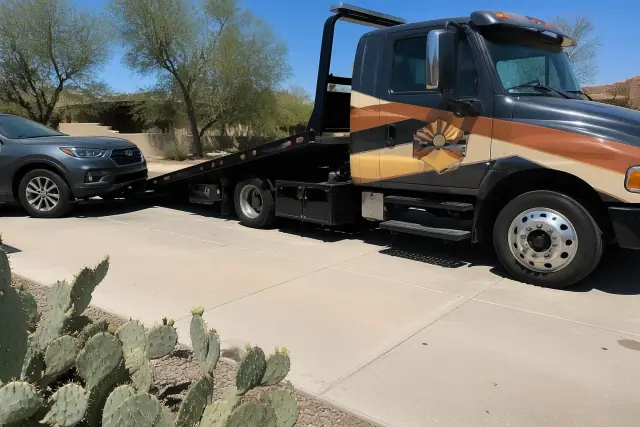
Company contact information, applicable registration details, and driver identification should be visible before hookup. Missing identification makes accountability harder.
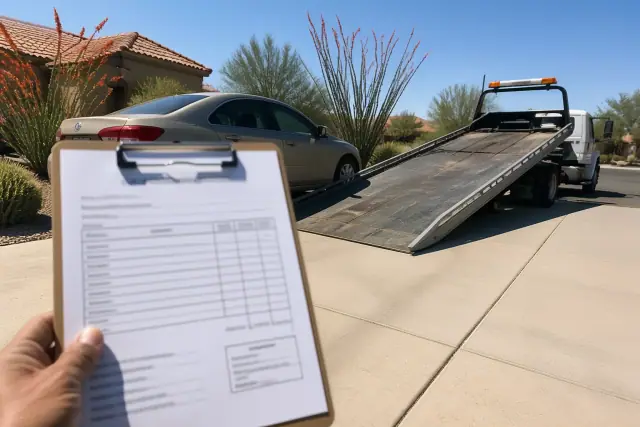
The quote should separate the hookup fee, mileage charge, taxes, and any after-hours surcharge. Clear line items make bait pricing easier to spot.
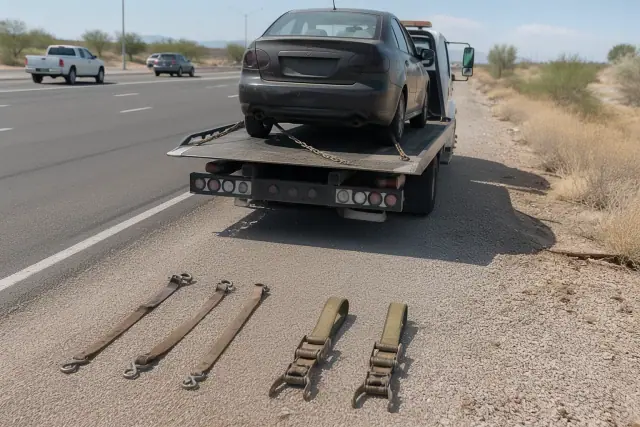
Compare frayed straps, rusted winches, or missing safety chains with a secure vehicle-specific setup. Motorcycles need a wheel chock and soft-tie system.
Match the company name and phone number on the truck with the driver's identification and paperwork.
Confirm the base fee, per-mile charge, taxes, and disclosed surcharges before the truck rolls.
Verify who requested the tow and turn away a driver who cannot provide clear dispatch details.
Check the straps, winch, safety chains, and vehicle-specific equipment before authorizing the move.
| Red Flag | Why It Matters | Safer Response |
|---|---|---|
| No visible truck or driver identification | Ownership and accountability are unclear. | Verify the operator, company details, and applicable registration before hookup. |
| No proof of on-hook or garagekeepers coverage | Coverage for vehicle damage is unclear. | Request current proof that covers your vehicle type. |
| No price range before dispatch | Hidden hookup, mileage, storage, or surcharge costs may follow. | Get the base fee, per-mile rate, taxes, and surcharges in writing. |
| Truck arrives without a confirmed request | The tow may not have been authorized by you, an officer, or your insurer. | Confirm the dispatch independently before allowing a hookup. |
| Pressure to sign immediately | The form may contain rates or release terms you have not reviewed. | Read the full authorization before signing. |
| Worn or unsuitable towing equipment | Bad straps, chains, or hookup methods increase damage risk. | Decline the tow if the equipment does not fit the vehicle and job. |
Start with identification and authorization. A legitimate operator should arrive in a marked truck displaying company contact information and applicable Arizona registration or permit details, and the driver should be able to provide ID and proof of on-hook or garagekeepers coverage. For interstate long-distance towing, ask for the USDOT number required under Federal Motor Carrier Safety Administration rules. Do not allow an unsolicited driver to hook up your vehicle; confirm whether you, an officer, or your insurer actually requested the tow. Inconsistent branding across the truck, uniform, and paperwork is another reason to stop and verify.
Before dispatch, get a realistic range that separates the base hookup fee, per-mile rate, taxes, and after-hours surcharges. Ads promoting a flat $29 or $35 tow are a warning when winching, storage, cleanup, tarp, or environmental charges appear only after the vehicle is loaded. Take thirty seconds to read any release or authorization and question totals that differ sharply from the quote. At the truck, look for worn straps, rusted winches, missing or nonworking safety chains, poor wheel-lift technique, or a motorcycle setup without a wheel chock and soft ties. On a 115-degree Phoenix afternoon, urgency is real, but it should not replace clear pricing and a safe hookup.
Ask whether the operator can show proof of on-hook and garagekeepers insurance and whether it covers your vehicle type. Confirm the base hookup and per-mile charges, which taxes or surcharges apply, and whether the estimate will be documented before dispatch. If the truck arrives unexpectedly, request the driver's name, company identification, and dispatch confirmation, then contact the officer or insurer yourself rather than relying on the driver's claim. For reputation, look for repeated reports about overcharging, rude collection tactics, no-shows, delayed vehicle release, or damage instead of treating one isolated complaint as decisive. Also confirm that the operator has the correct flatbed, motorcycle, accident-recovery, or long-distance equipment for the job.
Share your vehicle type, pickup point, and destination. Ask for the hookup fee, mileage rate, and any surcharges before dispatch so you can compare the quote clearly.