Billing and Storage Fees
Hidden mileage, after-hours, credit card, and daily storage charges should not first appear after the vehicle is already on the flatbed or in the yard.
Every week, Phoenix Towing Co. hears from Valley drivers facing undisclosed fees, questionable private-lot removals, vehicle damage, or a two-hour wait for a truck that never arrived. Understanding the records, deadlines, and complaint routes can help a driver recover a vehicle without compounding the original problem.
Hidden mileage, after-hours, credit card, and daily storage charges should not first appear after the vehicle is already on the flatbed or in the yard.
A disputed removal may involve missing landowner authorization, required signage, notice, a valid rotation contract, or recognition of a posted parking permit.
Keep the quote, posted rates, invoice, photos, notices, and dispatch messages. Ask for every charge in writing and protect the 10-day post-storage hearing window.
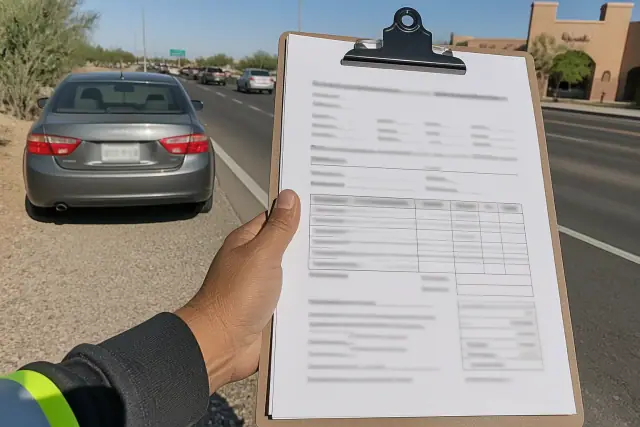
The base tow, mileage, storage days, and admin fee beside the rates posted at the yard. The comparison can reveal a charge that was not disclosed before dispatch.
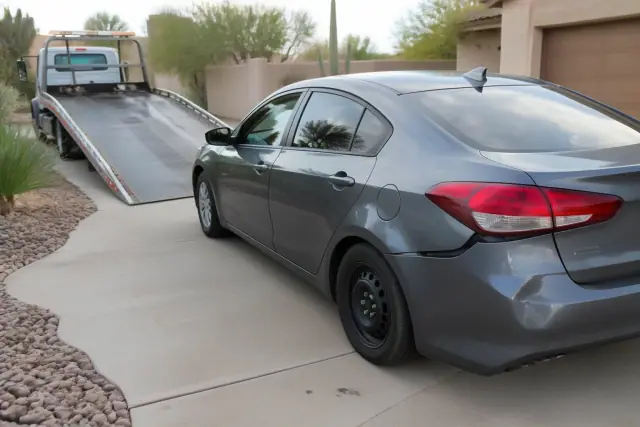
Capture scraped bumpers, undercarriage contact, or motorcycle damage from several angles. Before-and-after images make the vehicle's condition easier to compare.
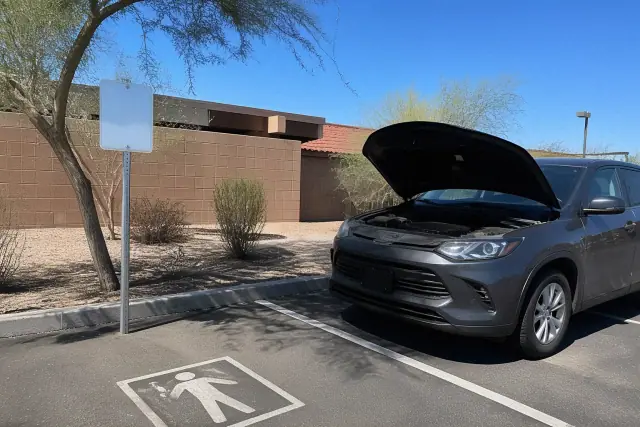
Photograph the lot entrance, towing signs, displayed permit, and exact parking space. These details matter when authorization or notice is disputed.
Compare the original quote with the posted rate and an invoice that separates the base tow, mileage, storage days, and admin fee.
Consent, police-ordered, and property-ordered tows do not follow identical rules. For a non-consent tow, confirm the required owner and agency notifications.
Arizona law and Phoenix Municipal Code allow a post-storage hearing request within 10 days. Organize the tow record and supporting evidence promptly.
Refusing card payment, demanding cash before release, or blocking access to personal items are warning signs. Preserve any written payment demand or refusal.
| Complaint | Evidence to Keep | Possible Route |
|---|---|---|
| Undisclosed or excessive fees | Written quote, posted rates, and itemized invoice | Arizona Department of Public Safety Tow Service Program |
| Unauthorized private-lot tow | Parking permit, property signs, notice, and tow record | Phoenix Police Department or a post-storage hearing |
| Vehicle damage | Before-and-after photos and the tow paperwork | Small claims court for damages under $3,500 |
| Slow response or no-show | Call times, messages, and dispatch details | Arizona Department of Public Safety Tow Service Program |
Most towing complaints fall into four groups: billing disputes, unauthorized removal, vehicle damage, and poor customer service. Legitimate operators file paperwork, carry insurance, and post rates; many disputes begin when one of those safeguards is skipped. A driver should ask for the tow record and itemized invoice instead of relying on a verbal explanation alone.
A short local tow commonly falls between $35 and $125, while a tow up to 40 miles may fall between $125 and $275. If an unexplained quote is double that amount, request an itemized breakdown in writing before agreeing to the charge. Some states cap light-duty non-consent storage at $40 to $60 a day, and Arizona operators should post comparable yard rates clearly at the entrance. Beyond price, consent and authorization matter: a private-property removal may turn on the landowner contract, signage, notice, rotation agreement, or displayed permit. Vehicle damage complaints often concern scraped bumpers, dragged undercarriages, dropped motorcycles, flatbed loading, or long-distance transport. For slow responses and no-shows, especially during monsoon-season demand across Maricopa County, preserve call times and dispatch messages.
Can a tow be challenged? Arizona law and Phoenix Municipal Code allow a post-storage hearing request within 10 days. Where can a complaint go? Depending on the issue, the source identifies the Arizona Department of Public Safety Tow Service Program, Phoenix Police Department, or small claims court for damages under $3,500. Keep the written quote, itemized invoice, payment record, damage photos, lot signage, permit, notices, and dispatch log so the complaint can be evaluated against the available records.
Share the written quote, invoice, tow record, and a clear description of what happened. A local towing professional can help explain the charges and records before you decide what to do next.